In vitro fertilization (IVF) is one of the most widely used assisted reproductive technologies (ART) to help individuals and couples facing difficulty conceiving. It may be recommended for blocked fallopian tubes, endometriosis, male infertility, unexplained infertility, or after several unsuccessful attempts to become pregnant.
IVF involves collecting eggs, fertilizing them with sperm in a laboratory, and then transferring one or more embryos into the uterus. Advances in fertility laboratories have significantly improved success rates in recent years.
For some African patients, accessing a specialized fertility center abroad provides access to advanced technology, recognized expertise, and personalized support throughout their international care pathway.
When Is IVF Recommended?
IVF may be considered when pregnancy does not occur despite regular attempts, or when a medical condition reduces the chances of natural conception.
The most common situations include blocked or damaged fallopian tubes, endometriosis, male infertility, diminished ovarian reserve, unexplained infertility, failed intrauterine insemination, or the use of donor gametes depending on medical indications and the regulations of the country concerned.
Each case is reviewed individually to determine the most appropriate technique.
The Workup Before IVF
Before starting treatment, a complete workup helps identify the causes of infertility and tailor the protocol.
Female fertility evaluation: Anti-Müllerian hormone (AMH) testing estimates ovarian reserve, hormone levels (FSH, LH, and estradiol) are measured early in the cycle, a pelvic ultrasound counts follicles and examines the uterus, and hysterosalpingography (HSG) checks whether the tubes are open when this test is needed.
Male fertility evaluation: The male partner usually undergoes a semen analysis to assess sperm count, motility, and shape. Depending on the results, additional tests may be requested.
Gamete donation: When pregnancy using the couple's own gametes is not possible, some patients or couples may use donor sperm or eggs, depending on medical indications and the laws of the country where treatment takes place.
The Main Steps of IVF
Each protocol is personalized, but the overall steps remain broadly the same.
1. Ovarian stimulation: Over about 10 to 12 days, hormone injections stimulate the ovaries to mature several eggs. Blood tests and ultrasounds allow specialists to adjust treatment based on each patient's response.
2. Egg retrieval: Once the follicles reach the desired size, an injection triggers final egg maturation. Retrieval is performed under sedation or light anesthesia and usually takes less than thirty minutes. A sperm sample is collected and prepared in the lab the same day.
3. Laboratory fertilization: In conventional IVF, eggs and sperm are combined under controlled conditions so fertilization occurs naturally. For significant male infertility or after a previous fertilization failure, ICSI involves injecting a single sperm directly into each mature egg, which increases fertilization chances in certain situations.
4. Embryo culture: Embryos are observed for several days in a specialized incubator. Embryologists assess their development to select the one with the best chances of implantation. Good-quality embryos that are not transferred can be frozen for later use.
5. Embryo transfer: The transfer is a simple procedure that usually does not require anesthesia. Using a very fine catheter, the specialist gently places the embryo into the uterus. Hormone treatment continues to support implantation, and a blood test a few days later confirms whether pregnancy has begun.
Treatment Options Based on Your Situation
Depending on the workup results, different approaches may be proposed:
Blocked tubes: Conventional IVF or ICSI.
Severe male infertility: ICSI or donor sperm depending on indications.
Low ovarian reserve: Personalized protocol or egg donation depending on the situation.
Repeated implantation failure: Additional testing and, in some cases, preimplantation genetic testing (PGT).
Fertility preservation: Freezing eggs or embryos before certain medical treatments.
How CureSureMedico Supports You
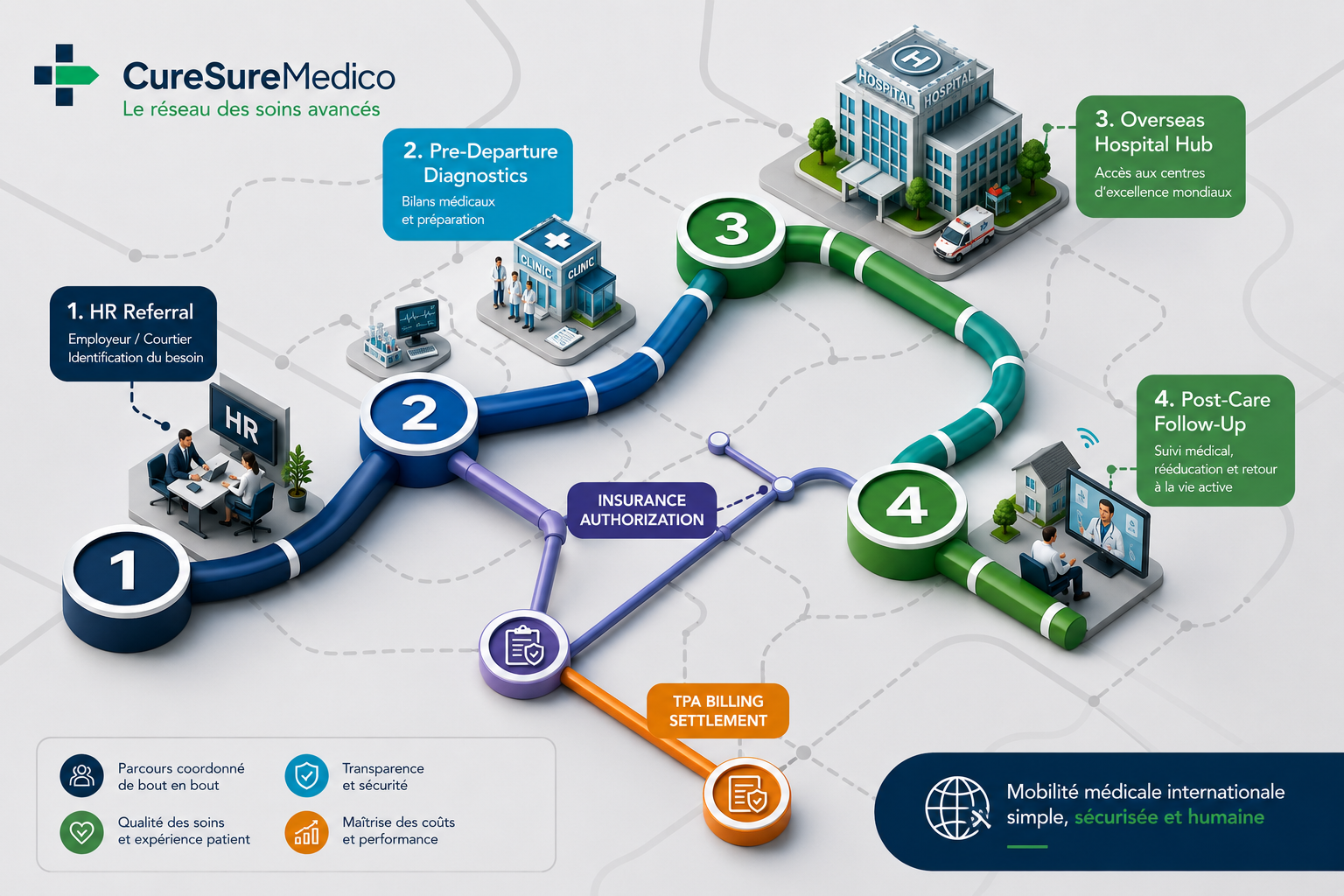
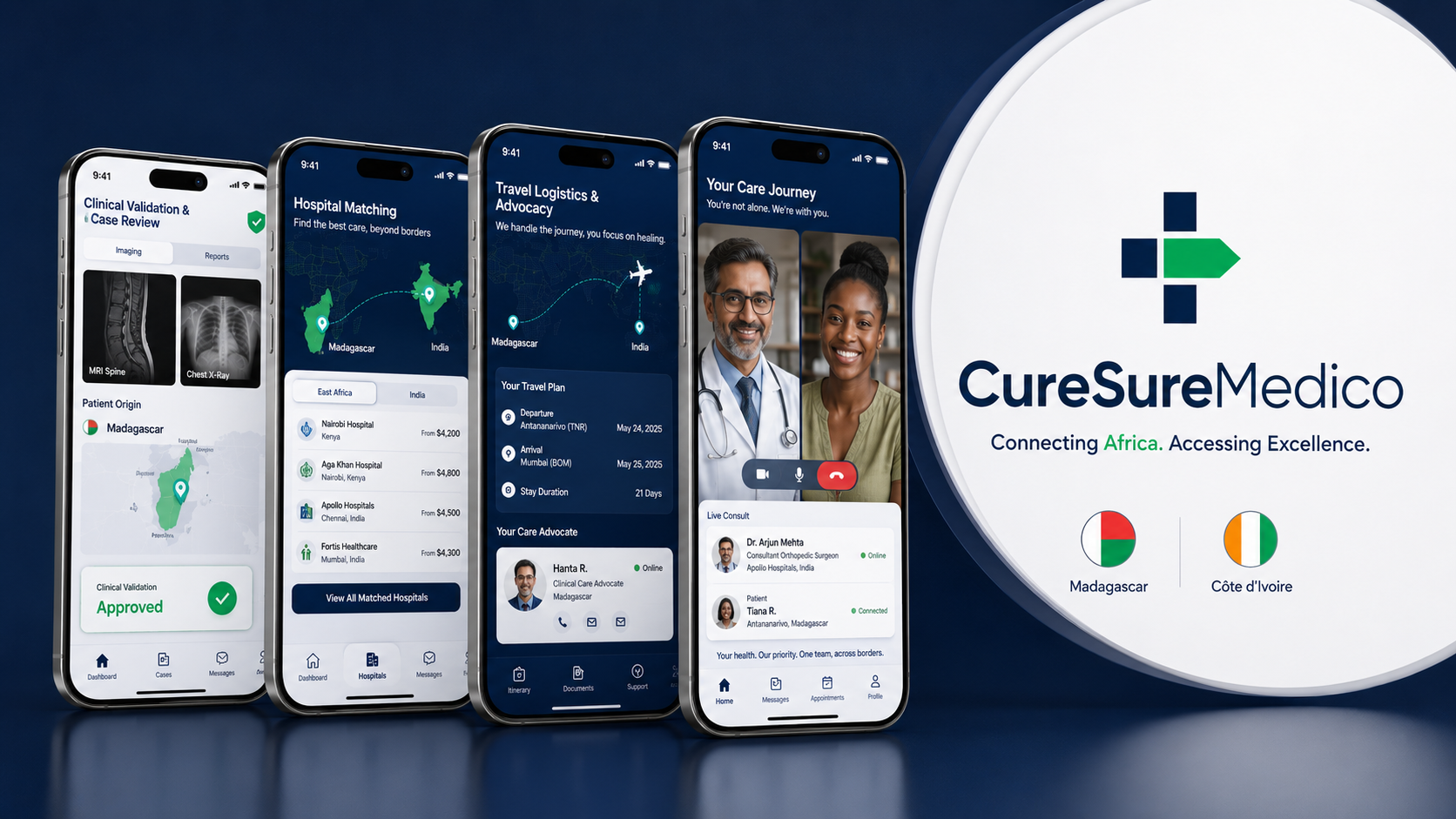
Organizing fertility treatment in another country requires careful preparation. CureSureMedico supports African patients throughout their international care pathway to facilitate access to recognized fertility centers.
Independent review of the medical file, referral to fertility specialists, coordination with partner centers, appointment scheduling, medical travel arrangements, administrative assistance, follow-up before returning home, and continuity of care after treatment.
Our support includes:
Access IVF at a Specialized Center
Starting an assisted reproduction journey is an important decision. Being supported by an experienced team and having access to a high-performing laboratory can make a real difference.
CureSureMedico helps African patients access international centers specialized in IVF, ICSI, gamete donation, and fertility preservation. Our team coordinates every step of the journey so patients can focus on their parenthood project with confidence.
Frequently Asked Questions
What is the difference between conventional IVF and ICSI?
In conventional IVF, eggs and sperm are combined in the lab. In ICSI, an embryologist injects a single sperm directly into the egg. This technique is mainly used for male infertility or after a previous fertilization failure.
How long does an IVF cycle take?
A complete cycle usually takes between three and four weeks. For patients traveling from abroad, a stay of two to three weeks is often necessary to complete ovarian stimulation, egg retrieval, and embryo transfer.
What is the success rate of IVF?
Success rates depend on many factors, including the patient's age, egg and sperm quality, the cause of infertility, and embryo quality. Your specialist can give you an estimate tailored to your situation.
Is IVF painful?
Most steps involve little pain. Hormone injections may cause mild discomfort, while egg retrieval is performed under sedation or light anesthesia.