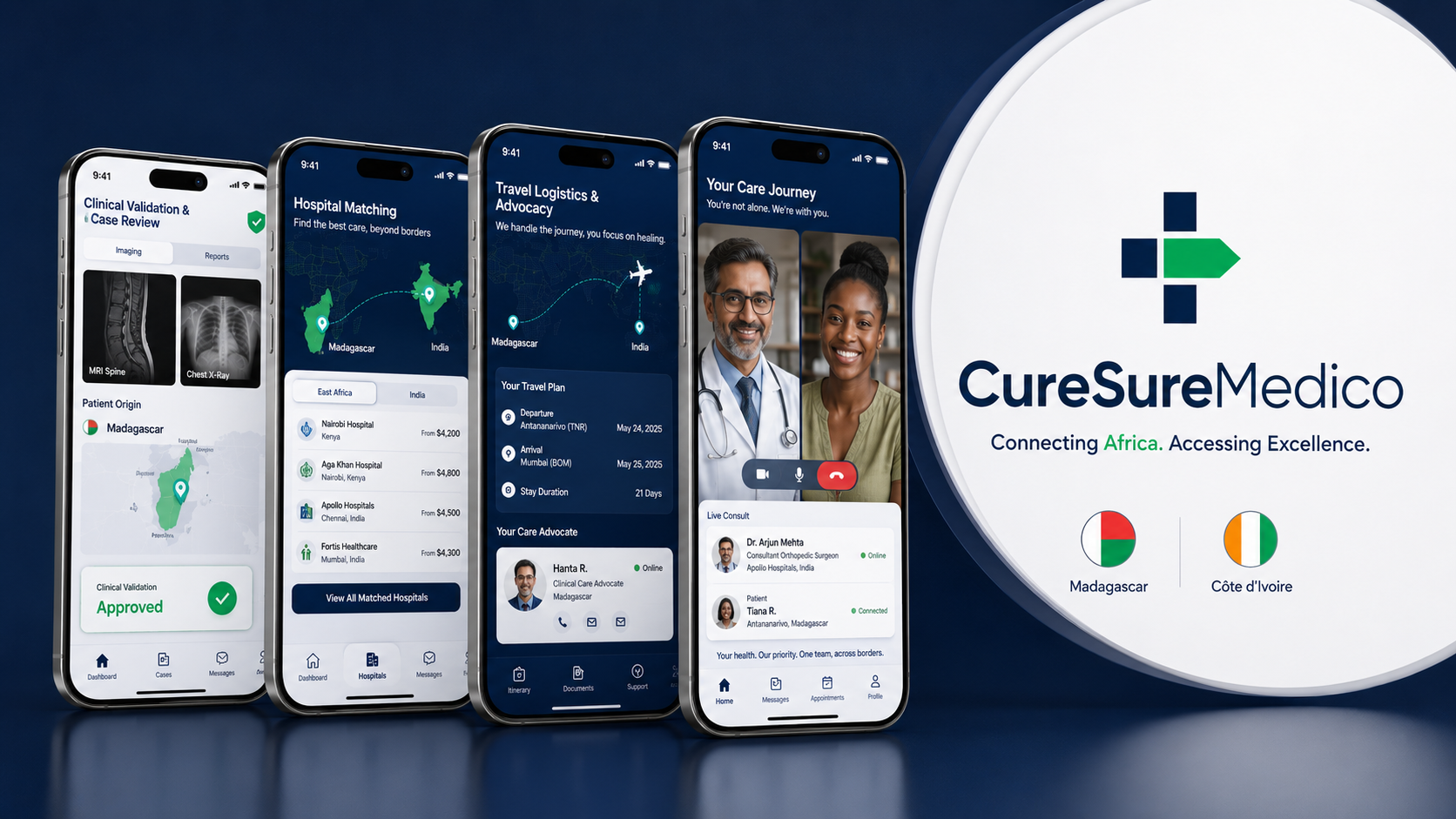
Planning treatment abroad is a big decision. Along with choosing a hospital, you may need to organize flights, prepare medical records, and arrange travel for yourself or your family. It can quickly become overwhelming.
Before making those plans, one important question should already have an answer: are you medically ready to travel? At CureSureMedico, we believe every patient deserves a clear answer before booking a flight or committing to treatment abroad.
That is why we created Case Assisted Triage (CAT), a structured medical review that helps us understand your condition, check that your medical records are complete, and make sure international treatment is the right option for you. Our goal is simple: help you travel safely, avoid unnecessary costs, and make sure the destination hospital receives everything it needs before you arrive.
What Is Case Assisted Triage (CAT)?
Think of CAT as the first clinical checkpoint in your medical journey. It is much more than collecting documents or filling out forms. Experienced medical professionals carefully review your medical history, test results, imaging, and treatment records before your case moves forward.
This review helps answer important questions: is international treatment necessary, are your medical records complete, do specialists already have enough information, are there any missing tests, and are you fit to travel? By answering these questions early, we reduce delays and help hospitals prepare for your arrival.
Step 1: Understanding Your Medical History
Once you submit your documents through our website, mobile app, or WhatsApp, our medical team begins a structured review. Every case follows the same process, starting with understanding your situation.
Our medical reviewers carefully examine your documents and organize all available information, including doctor's referral letters, laboratory results, X-rays, CT scans, and MRI images, pathology reports, current medications, and previous treatments. Having everything in one place makes it easier for specialists to understand your condition without asking you to repeat your medical history.
Step 2: Setting the Right Priority
Not every patient needs the same level of urgency. Our team reviews your condition and assigns the appropriate priority level based on medical needs, not emotions or personal preference. Cases fall into four categories.
Critical (P1): Life-threatening or organ-threatening conditions that require immediate attention. These cases move directly to the destination hospital as quickly as possible.
Urgent (P2): Conditions that are progressing and should be reviewed by an international specialist within the next two to four weeks.
Elective (P3): Stable conditions where consultations, planned procedures, or second opinions can be scheduled without urgency.
Local Redirect (P4): Sometimes the best care is already available close to home. If experienced reviewers believe your condition can be treated safely by qualified local specialists, we will tell you honestly. Avoiding unnecessary medical travel is just as important as arranging it when needed.
Step 3: Evaluating Your Case
After understanding your medical history, we review five important areas that each contribute to your overall CAT Score. The score helps determine the next step in your medical journey.
Green (8–10): your case is complete and ready for hospital matching. Amber (6–7.9): your case is promising, but a few details still need clarification. Red (below 6): more information is needed before your case can safely move forward.
Diagnostic completeness: Do your test results include everything the specialist needs?
Medical history: Is your medical history detailed enough for a specialist to understand your condition?
Travel readiness: Are you physically able to travel safely, and do you have the documents needed for treatment abroad?
Referral quality: Is there enough medical information from your local doctor to support your referral?
Clinical urgency: Does your condition justify international treatment at this stage?
Step 4: Diagnostic Gap Report (DGR)
Sometimes, important medical information is missing. For example, a test may be outdated, a scan may not meet international standards, or a specialist may need additional results before giving a medical opinion.
When this happens, our doctors prepare a Diagnostic Gap Report (DGR) that clearly explains what is missing and why it matters. Instead of asking you to guess what comes next, we provide a simple checklist of the tests or documents needed before your case moves forward. This helps prevent delays and ensures specialists receive the information they need from the beginning.
Why CAT Matters
A complete medical file saves time. It also helps doctors make faster and more informed decisions. By reviewing every case before hospital matching, CAT helps us reduce unnecessary travel, avoid missing medical information, prepare hospitals before your arrival, speed up specialist reviews, improve communication between healthcare teams, and give patients and their families greater peace of mind.
Most importantly, it helps ensure that international treatment begins with accurate information rather than assumptions.
Built for Patients and Families
Planning treatment abroad can be stressful. CAT removes much of the uncertainty before your journey even begins. When you arrive at your destination hospital, your specialists already have access to your medical records and understand your condition.
That means fewer surprises, fewer delays, and more time focused on your care. You can travel knowing that your case has already been reviewed and prepared by experienced medical professionals.
Built for Employers and HR Teams
Many employers help employees access medical care outside their home country. CAT makes that process easier. Instead of reviewing medical files or making clinical decisions, HR teams receive clear progress updates while our case-management team organizes the medical records and coordinates specialist review.
We organize the available medical information, identify missing records and coordinate the appropriate clinical review. Medical urgency and treatment decisions are determined by qualified healthcare professionals. This allows employers to support their employees without becoming involved in medical decision-making.
A Better Start to Your Medical Journey
Successful medical travel begins long before boarding a plane. It starts with a careful review of your medical information. Case Assisted Triage (CAT) helps ensure that relevant medical information is organized and made available to the appropriate specialist for assessment, and that the right specialists receive the right information at the right time. By reviewing every referral before hospital matching, CureSureMedico helps make cross-border medical travel safer, clearer, and better organized.
Whether you are seeking a second opinion, specialized treatment, or complex surgery abroad, CAT gives you a stronger and more confident start to your healthcare journey. Contact a CureSureMedico care coordinator today.