Parkinson's disease is a progressive neurological disorder that impacts millions of lives globally. It develops when dopamine-producing neurons in the brain deteriorate, leading to motor dysfunction, involuntary tremors, muscle stiffness (rigidity), slowness of movement (bradykinesia), and severe balance instability. For many patients, initial treatment with oral dopamine-replacement medications (such as levodopa) brings welcome relief. However, as the condition progresses over several years, patients often experience unpredictable "motor fluctuations"—a distressing roller-coaster effect where medication rapidly wears off, leaving periods of severe motor impairment alternating with medication-induced involuntary writhing movements (dyskinesia).
For individuals suffering from disabling tremors, severe off-time motor fluctuations, or medication side effects, traditional drug adjustments may no longer provide consistent quality of life. Deep Brain Stimulation (DBS) has emerged as an advanced, life-changing surgical intervention in movement disorder neurology. By delivering targeted electrical impulses to specific deep brain structures, DBS acts as a precise neuromodulation system that restores functional motor control without permanently damaging brain tissue.
For international patients across Sub-Saharan Africa facing complex movement disorders, obtaining an accurate candidacy assessment and accessing specialized neurosurgical centers requires careful clinical evaluation, multidisciplinary expert review, and well-coordinated medical travel logistics. Planning this healthcare journey ensures comprehensive pre-surgical screening before departure, enabling a seamless transition to accredited international neurological centers for safe, life-transforming care.
Expert Video Overview & Clinical Insights
To better understand how Deep Brain Stimulation works and how it restores functional independence for patients living with movement disorders, watch the featured clinical case discussion from University Hospitals, featuring Dr. Camilla Kilbane, Director of the Movement Disorders Center:
Source: "Deep Brain Stimulation Treatment for Parkinson's Disease" — University Hospitals Channel.
Key clinical insights highlighted by Dr. Camilla Kilbane in the video include:
Watch Dr. Camilla Kilbane, Movement Disorder Specialist at University Hospitals, explain the mechanism and clinical impact of Deep Brain Stimulation (DBS) for Parkinson's disease in detail above.
The Cardiac Pacemaker Analogy: "The best way to think about Deep Brain Stimulation is that it's a pacemaker for the brain, just like a pacemaker for the heart. There are these abnormal brain rhythms and the brain neurons are communicating in this abnormal rhythm, and this stimulator comes in and breaks that signal and restores a more normal brain rhythm." — Dr. Camilla Kilbane, Movement Disorder Specialist at University Hospitals
Expanding Clinical Horizons & Early Intervention: "We could give patients more medication, but the way the field is moving is that we're moving DBS from an advanced therapy for advanced Parkinson's disease to moderate Parkinson's disease. We're moving the needle up to the point where it's not just about how long you've had Parkinson's or daily medication doses, but how much it is impacting your quality of life." — Dr. Camilla Kilbane
Target Symptoms & Motor Benefit: "It doesn't cure Parkinson's disease, but it's exceptionally good at treating stiffness, slowness, tremor, motor fluctuations (the ups and downs that people experience in symptoms), and dyskinesia." — Dr. Camilla Kilbane
What Is Deep Brain Stimulation (DBS)?
Deep Brain Stimulation (DBS) is a sophisticated neurosurgical procedure in which thin, insulated wires (electrodes) are implanted into specific deep structures of the brain responsible for motor control. These electrodes are connected via sub-dermal extension wires to a small, battery-powered Neurostimulator or Implantable Pulse Generator (IPG), which is surgically placed beneath the skin of the upper chest (similar to a heart pacemaker).
The system runs as a connected chain of three components:
Brain Electrodes: Implanted in the Subthalamic Nucleus or Globus Pallidus.
Extension Wire: Tunneled under the skin behind the ear and neck.
Neurostimulator (IPG): Implanted beneath the skin below the collarbone.
How Neuromodulation Works
In Parkinson's disease and essential tremor, the loss of normal neurotransmitter signaling causes groups of neurons in deep brain regions—primarily the Subthalamic Nucleus (STN) or the Globus Pallidus internus (GPi)—to fire in abnormal, synchronized electrical bursts.
The implanted neurostimulator delivers continuous, high-frequency electrical pulses to these target centers. These micro-electrical signals disrupt and block the chaotic, abnormal neural activity, effectively "canceling out" the pathological brain signals that cause tremors, stiffness, and involuntary movements.
Clinical Indications: When Is DBS Recommended?
DBS is a tailored intervention that requires meticulous neurological evaluation to determine candidacy. It is primarily indicated for patients who continue to experience significant motor symptoms despite optimized medical therapy.
Key Medical Indications
Parkinson's Disease with Motor Fluctuations: Patients who experience beneficial responses to levodopa, but suffer from severe "on-off" fluctuations, unpredictable wear-off periods, or levodopa-induced dyskinesias.
Medication-Refractory Tremor: Patients with severe resting or action tremors (due to Parkinson's disease or Essential Tremor) that fail to respond adequately to high-dose oral medications.
Primary Dystonia: Patients suffering from involuntary muscle contractions causing repetitive or twisting movements.
Impact on Quality of Life: As emphasized by Dr. Kilbane, candidates include individuals whose tremors or motor symptoms prevent them from performing basic activities of daily living—such as eating, writing, holding family members, or maintaining balance.
Treatment Comparison: DBS vs. Traditional Medical Management
The following table compares long-term oral medical therapy with surgical Deep Brain Stimulation for managing Parkinson's disease and movement disorders:
| Parameter | Oral Medical Management (Levodopa/Dopamine Agonists) | Deep Brain Stimulation (DBS) Neurosurgery |
|---|---|---|
| Invasiveness | Non-invasive; daily oral medications. | Surgical; stereotactic neurosurgery to place brain leads and chest pulse generator. |
| Symptom Control Mechanism | Biochemical replenishment of systemic dopamine levels. | Electrical neuromodulation directly disrupting abnormal neural circuits. |
| Motor Fluctuations | High risk of "on-off" motor swings and dyskinesia after 5–7 years of use. | Smooths out motor fluctuations, significantly reducing "off" time and dyskinesia. |
| Medication Requirement | Requires frequent, high-dose scheduling throughout the day. | Often allows a substantial reduction in daily levodopa medication dosage. |
| Reversibility & Adjustment | Reversible by altering drug dosages; limited by systemic side effects. | Fully adjustable via external wireless programming; completely reversible and removable if needed. |
| Effect on Disease Progression | Does not alter neurodegeneration; manages clinical symptoms. | Symptom-relieving intervention; does not cure Parkinson's but restores functional ability. |
Diagnostic Workup: Key Pre-Surgical Evaluations
To qualify for Deep Brain Stimulation and ensure optimal surgical outcomes, patients undergo a thorough multidisciplinary screening process:
High-Resolution 3T Brain MRI (DBS Protocol): Provides precise anatomical imaging of deep brain nuclei (STN and GPi) to map out safe micro-electrode trajectory paths and avoid cerebral blood vessels.
Comprehensive Levotopa Challenge Test (ON/OFF Motor Testing): A Movement Disorder Neurologist formally evaluates motor function (using the UPDRS rating scale) while the patient is completely "OFF" medication, and compares it to scores after receiving a standardized "ON" dose of levodopa. High levodopa responsiveness predicts excellent DBS outcomes.
Neuropsychological Assessment: Detailed cognitive and emotional evaluations to rule out severe dementia, untreated major depression, or advanced cognitive decline, ensuring the patient can safely tolerate procedure programming.
CT Angiography / Stereotactic Brain CT: Merged with MRI scans during surgical planning to establish exact 3D coordinates for electrode implantation.
Basic Medical & Coagulation Screening: Complete blood counts, coagulation panels, and cardiac evaluations to verify neurosurgical clearance.
Stage 1: Stereotactic Brain Electrode Implantation
Targeting & Mapping: The neurosurgeon secures a lightweight stereotactic frame (or uses a frameless robotic system) and merges real-time imaging to calculate precise sub-millimeter target coordinates.
Microelectrode Recording (MER): Under local anesthesia or light sedation, tiny recording micro-electrodes are inserted through small burr holes in the skull. The surgical team listens to real-time electrical firing patterns of individual brain cells to confirm exact positioning within the Subthalamic Nucleus or Globus Pallidus.
Intraoperative Clinical Testing: The patient is briefly awakened to test lead placement. The neurologist applies mild electrical stimulation to confirm tremor suppression while verifying that no unwanted side effects (such as facial tingling or speech slurring) occur.
Permanent Lead Placement: Permanent stimulation leads are anchored securely to the skull bone.
Stage 2: Neurostimulator Placement & Initial Programming
Pulse Generator Implantation: Under short general anesthesia, the neurostimulator (IPG) is implanted beneath the skin below the collarbone and connected via extension wires tunneled under the skin behind the ear.
Initial Activation & Outpatient Programming: Approximately 2 to 4 weeks after surgery (once brain tissue micro-swelling subsides), the movement disorder neurologist wirelessly activates the pulse generator. Over the following weeks, stimulation parameters (voltage, frequency, pulse width) are fine-tuned during routine outpatient visits to achieve maximum motor control with minimal medication.
Clinical Benefits
Dramatic Tremor Suppression: Highly effective at eliminating or significantly reducing severe resting and action tremors.
Reduction in "Off" Time: Provides consistent, round-the-clock motor stability, reducing unpredictable off-periods.
Decreased Medication Dependence: Enables many patients to reduce their daily dopamine medication burden, lessening drug-induced nausea, dyskinesia, and hallucinations.
Restoration of Independence: Patients regain the physical ability to write, dress, eat, hold loved ones, and maintain balance without assistance.
Possible Surgical Risks & Considerations
Surgical & Anesthetic Risks: Small risk of intracranial hemorrhage (1–2%), localized infection around the hardware, or wound healing issues.
Hardware-Related Events: Lead displacement, wire fracture, or battery depletion over time (rechargeable options last 15+ years; non-rechargeable batteries require quick replacement every 3–5 years).
Programming-Related Side Effects: Temporary stimulation side effects (such as mild speech slurring, muscle tightness, or tingling) which can be corrected by adjusting stimulation parameters wirelessly.
Expert Insights Summary
As emphasized by Movement Disorder Specialist Dr. Camilla Kilbane from University Hospitals:
On Reconceptualizing DBS: "We are shifting the clinical paradigm away from considering DBS solely as a last-resort option for end-stage illness. By offering neuromodulation to patients in moderate stages of Parkinson's disease, we can preserve functional independence, professional life, and personal dignity before severe disability sets in."
On Restoring Life's Milestones: "DBS is not a cure, but it fundamentally resets motor function—enabling patients to re-enter daily life, engage in hobbies like art or writing, and safely participate in family life."
International Medical Care with CureSureMedico
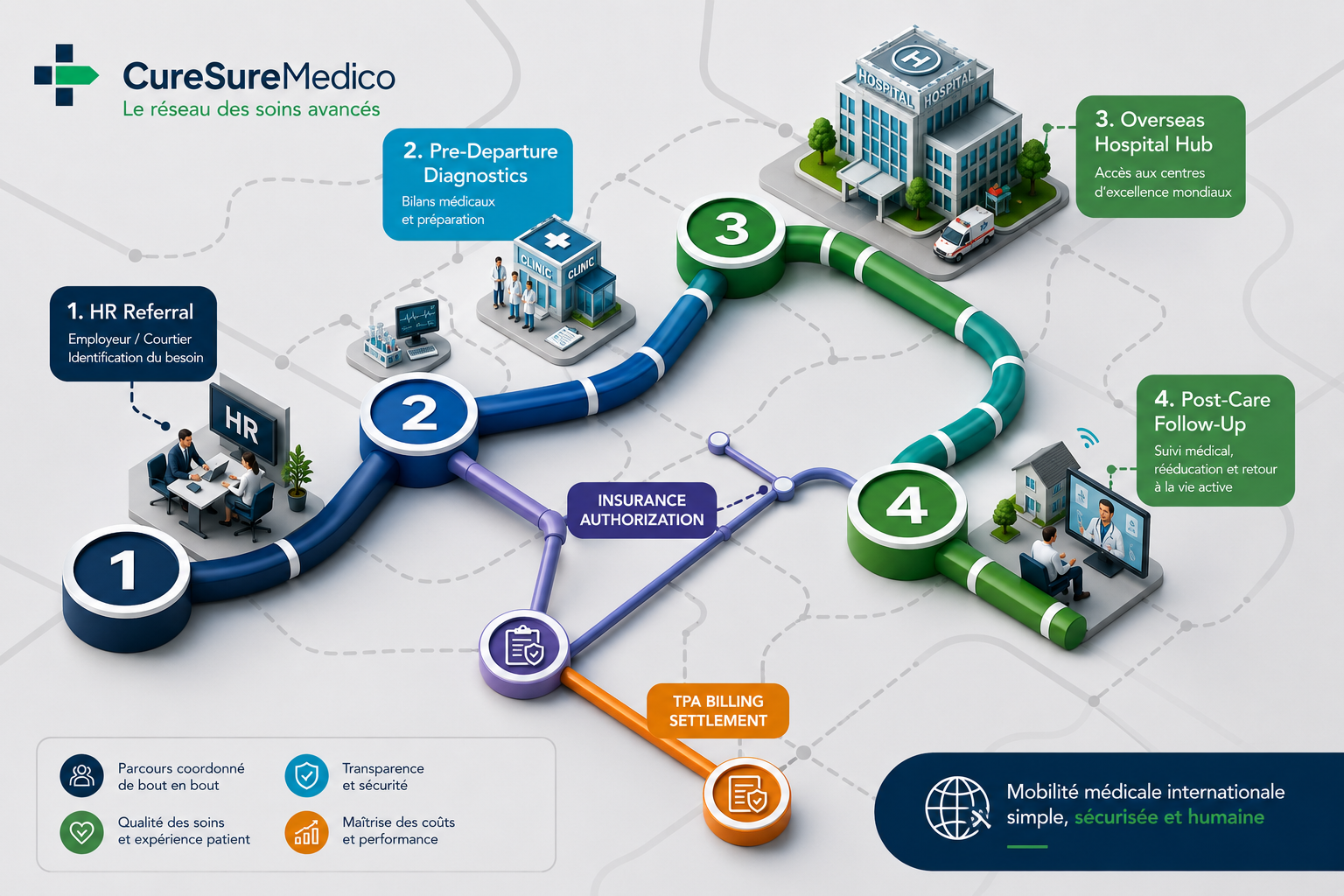
For patients across Sub-Saharan Africa seeking expert evaluation and deep brain stimulation for Parkinson's disease, essential tremor, or dystonia, organizing international medical travel requires clinical expertise and seamless logistics. CureSureMedico provides a dedicated, patient-centered international coordination framework:
Remote Neurological Record Review & Second Opinions: Before any travel is arranged, CureSureMedico collects your neurological clinical reports, motor history, and brain MRI scans. Our clinical board arranges pre-travel case reviews with international Movement Disorder Specialists and Functional Neurosurgeons to evaluate DBS candidacy.
Transparent Flat-Fee Case Management: CureSureMedico operates with direct hospital billing and transparent flat fees—ensuring no hidden markups or commissions on medical and neurosurgical care.
Pre-Travel Diagnostic Verification: Our medical team confirms that local MRI scans adhere to high-resolution stereotactic protocols, ensuring that your preliminary evaluation is complete before traveling abroad.
Complete Travel & Visa Facilitation: We manage urgent medical visa support documentation, priority hospital scheduling at accredited neurosurgical centers, airport transfers, accessible accommodations, and bedside assistant services.
Long-Term Programming & Tele-Neurology Support: Following successful surgery and initial programming, CureSureMedico coordinates remote tele-consultations and follow-up protocols between your international movement disorder specialist and your local neurologist back home in Africa.
Considering DBS Treatment?
If you or a loved one is living with Parkinson's disease, essential tremor, or dystonia and medication is no longer providing consistent symptom control, CureSureMedico can help you access an independent movement disorder evaluation and coordinate a seamless pathway to specialized neurosurgical centers.
Start with a clinical review — contact a CureSureMedico advisor today to evaluate your candidacy for Deep Brain Stimulation and discuss your treatment options.
Frequently Asked Questions
Does Deep Brain Stimulation cure Parkinson's disease?
No. DBS is a symptomatic treatment that controls motor symptoms (tremor, rigidity, slowness) and eliminates motor fluctuations. It does not cure Parkinson's disease or stop the underlying neurodegeneration, but it significantly improves quality of life and functional independence over many years.
Will I remain awake during the brain surgery?
In traditional DBS surgery, the patient is awake for a portion of the procedure during microelectrode recording and stimulation testing to verify tremor control in real-time. However, modern centers also offer "Asleep DBS" using intraoperative MRI or CT guidance for select patients who prefer general anesthesia.
How long does the Neurostimulator battery last?
Non-rechargeable neurostimulator batteries typically last between 3 and 5 years, depending on stimulation settings, and are replaced via a brief, minor outpatient procedure under local anesthesia. Rechargeable battery systems are also available, lasting 15 years or more with periodic home charging.
Can the stimulation settings be adjusted after surgery?
Yes. One of the major advantages of DBS is its adjustability. Your movement disorder neurologist uses an external hand-held programmer to wirelessly fine-tune voltage, frequency, and pulse width during routine clinic visits without requiring further surgery.
How soon can international patients travel back home after DBS surgery?
Patients typically remain in the hospital for 1 to 2 days after neurosurgery. International patients are usually recommended to remain near the neurosurgical center for 2 to 3 weeks following surgery to complete initial programming, wound check, and stimulation optimization before flying back home.