When an employee needs specialized treatment abroad, the company must act quickly. The priority is simple: help the employee access the right medical care as safely as possible.
However, many HR teams end up managing every part of the process. They search for hospitals, collect medical documents, arrange travel, and handle communication with foreign healthcare providers. This creates unnecessary pressure for HR teams.
Medical travel requires medical expertise, international coordination, and careful planning. It should not become another administrative task for your HR department. A structured healthcare coordination process allows companies to support employees while leaving medical decisions and complex logistics to experienced professionals.
The Hidden Challenges of HR-Managed Medical Travel
HR teams play an important role in employee support, benefits, and workplace wellbeing. However, international healthcare requires specific knowledge that most HR departments are not designed to handle. When HR teams manage medical travel alone, three major challenges appear.
1. Too Much Administrative Work
Medical travel involves many steps. HR teams may need to collect medical records, contact hospitals, prepare documents, organize visas, arrange flights, and coordinate communication between different countries. These tasks can quickly become overwhelming.
Your HR team should receive clear updates about the employee's situation, not manage every medical travel detail.
2. Difficult Medical Decisions
Choosing the right hospital or specialist is not only a travel decision. It is a medical decision. When an employee needs advanced treatment, how can an HR team know which specialist has the right experience for that specific condition?
Searching online or comparing hospitals based only on popularity does not provide enough clinical information. A medical review by qualified professionals helps identify the right treatment options based on the patient's actual needs.
3. Unclear Costs
International treatment can involve many expenses. Without proper coordination, companies may face unclear hospital bills, extra service fees, or unexpected travel costs.
A structured medical travel process creates better cost visibility and helps companies plan their healthcare budget with confidence.
A Simpler Way to Manage Cross-Border Care
Companies do not need to manage every step internally. With the right healthcare coordination partner, HR teams keep visibility while medical professionals handle the complex parts.
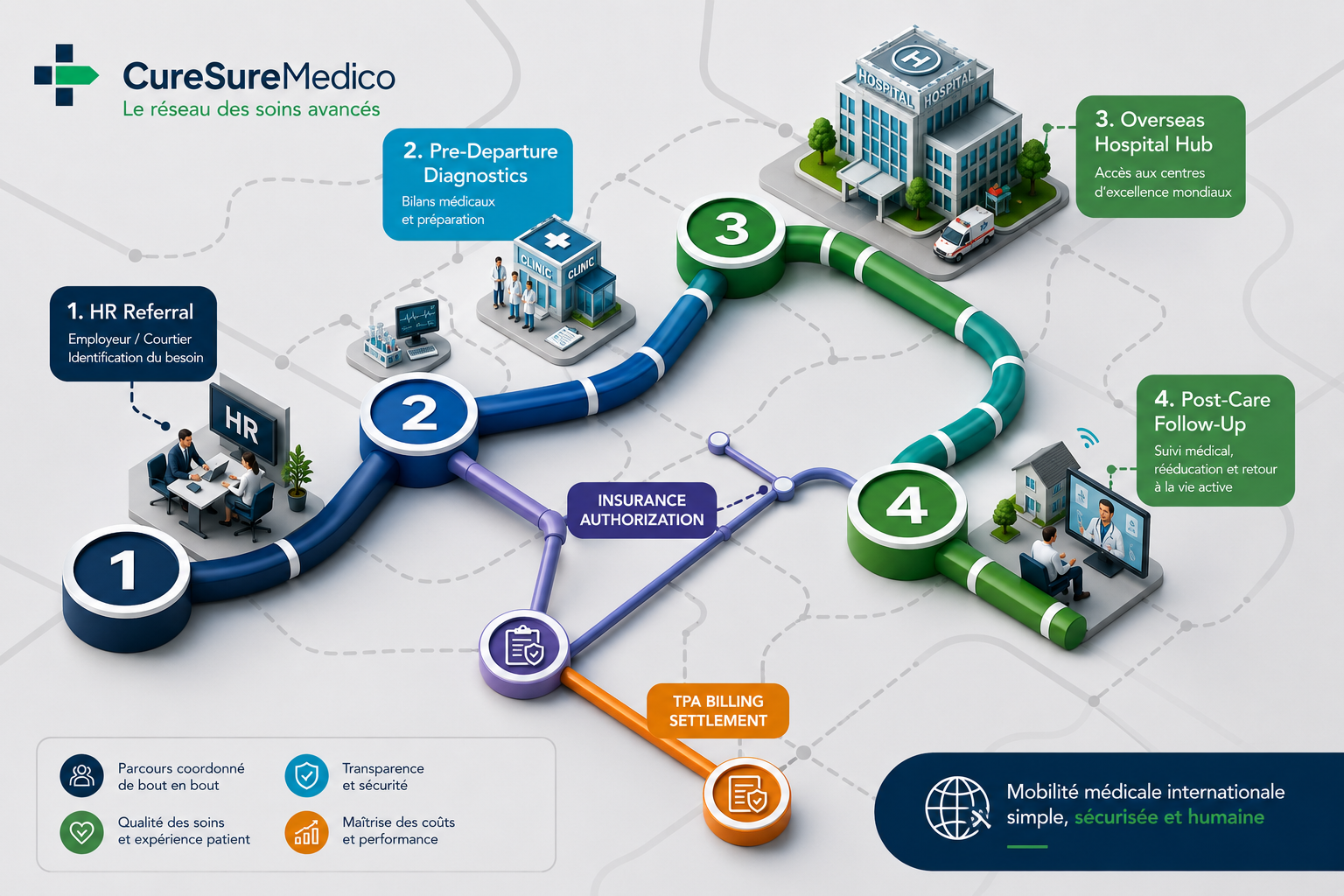
Traditional HR process: employee needs treatment → HR searches hospitals → HR manages travel → unexpected costs. Coordinated healthcare process: employee needs treatment → medical case review → specialist matching → clear costs and follow-up care.
Three Elements of a Better Corporate Healthcare Process
A better corporate healthcare process rests on three elements:
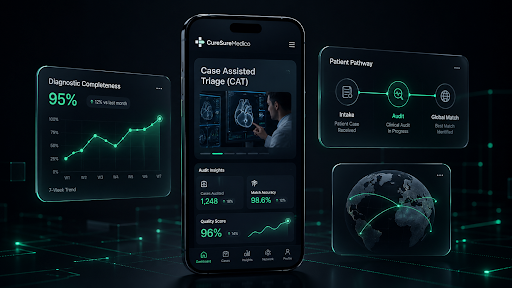
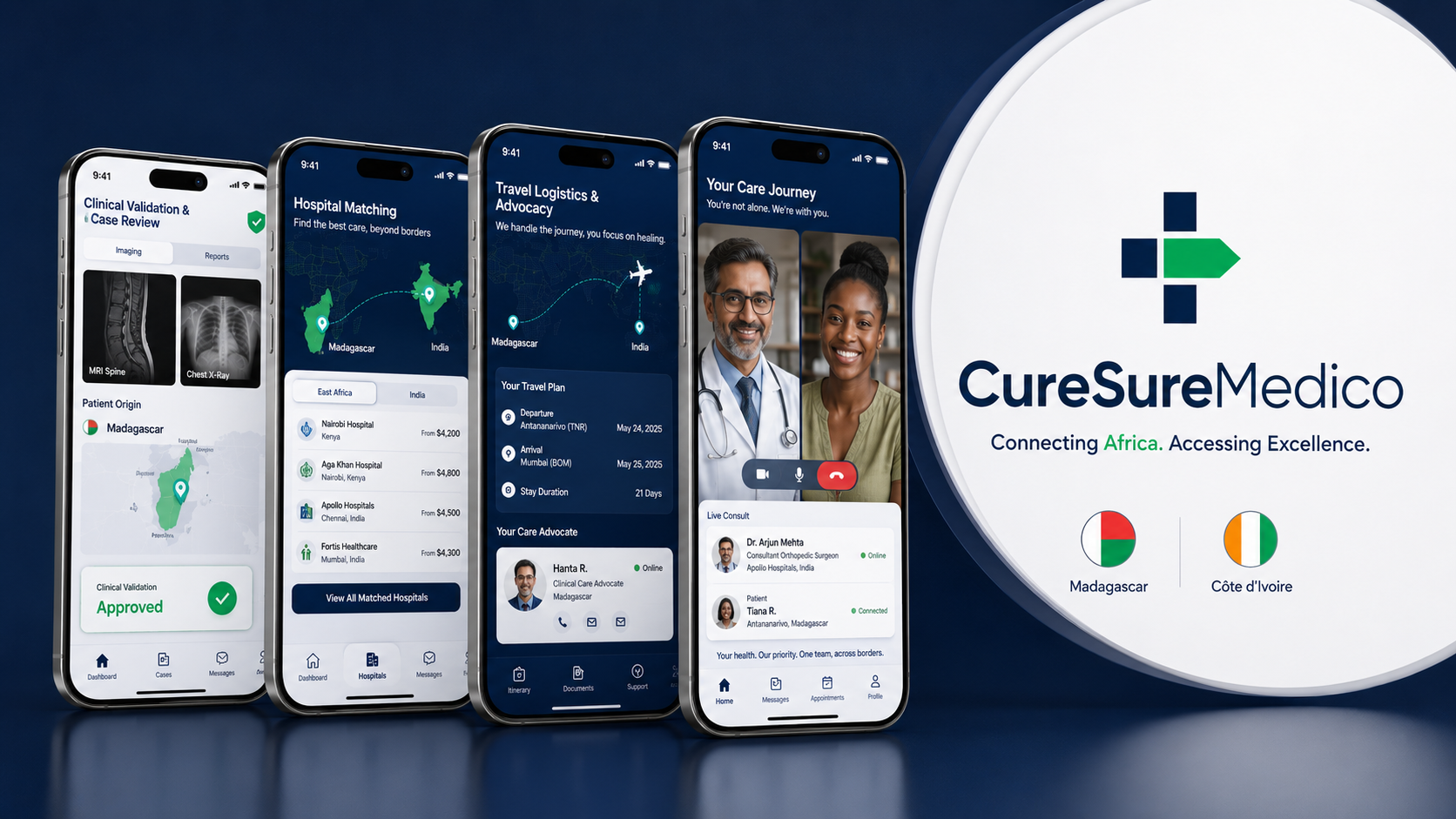
Medical Case Review Before Travel: Before an employee travels abroad, their medical case should be reviewed by qualified professionals. The Case Assisted Triage (CAT) process checks medical records, reviews the condition, and confirms whether international treatment is the right option. In some cases, remote medical consultations can solve the problem without requiring international travel, helping companies avoid unnecessary expenses while ensuring employees receive appropriate care.
Clear and Transparent Costs: Companies need clear information before approving international treatment. A reliable healthcare coordination process should provide transparent costs and avoid hidden fees. When hospitals manage treatment payments directly, companies have better financial visibility and fewer billing concerns.
Support Before, During, and After Treatment: Medical care does not stop when an employee arrives at another country. A complete healthcare support process helps employees during hospital admission, treatment, and recovery. After returning home, medical information can be shared with local doctors to support continued care, creating a smoother experience for both employees and employers.
Global Healthcare Support Without Extra HR Pressure
By working with a dedicated medical coordination partner, companies can give employees access to a global network of trusted hospitals and specialists. HR teams no longer need to make medical choices or manage complex international arrangements.
Instead, they receive clear updates while experts handle medical case review, hospital coordination, travel support, communication between healthcare teams, and follow-up after treatment. This allows HR departments to focus on supporting employees rather than managing medical logistics.
A Safer Approach to Corporate Medical Travel
International medical care can be complex. But companies do not have to manage every challenge alone. A structured healthcare coordination process helps employees reach the right specialists, reduces administrative pressure, and creates a safer experience for everyone involved. With the right support system, companies can provide employees with reliable access to global healthcare while keeping the process simple, transparent, and organized.
Does your organization have a clear process for international medical care, or are you looking to build one? Contact a CureSureMedico care coordinator today.