For people with end-stage chronic kidney disease (ESRD), kidney transplantation is now the treatment offering the best long-term outlook. Unlike dialysis, which requires several sessions each week, a successful kidney transplant can improve quality of life, extend life expectancy, and restore greater independence.
A kidney transplant is nonetheless a demanding medical journey. It requires a thorough evaluation, finding a compatible donor, surgery performed by an experienced team, and rigorous medical follow-up afterward.
For some African patients, accessing specialized centers abroad may be the best option when local resources are limited or waiting times are too long. Through a coordinated international care pathway, patients can reach experienced kidney transplant teams while receiving personalized support before, during, and after treatment.
Why Choose Transplantation Over Dialysis?
Dialysis replaces part of the kidneys' work, but it is not a permanent treatment. It places significant demands on patients and can affect quality of life.
Better quality of life, greater freedom in daily activities, fewer dietary restrictions, fewer complications linked to dialysis, and better life expectancy for many patients.
Every situation is different. The nephrologist determines whether transplantation is the best option based on the patient's overall health.
When transplantation is possible, it offers several advantages:
Pre-Transplant Workup
Before any transplant, the future recipient must undergo a complete workup. This step confirms that the transplant can be performed under the safest possible conditions, and helps identify the most compatible donor to reduce the risk of rejection.
Blood type (ABO compatibility): The donor and recipient must have suitable blood compatibility. This first step determines whether a transplant is feasible.
HLA typing: This test examines the immune characteristics of the donor and recipient. The greater the compatibility, the higher the chances of success.
Crossmatch test: This test checks that the recipient's antibodies do not react against the donor's cells, helping to prevent immediate rejection after transplantation.
General medical workup: A cardiac and respiratory evaluation, complete blood tests, infection screening, and a search for any contraindications to transplantation.
Psychological and social evaluation: Medical teams confirm that the patient understands the importance of anti-rejection medication, regular check-ups, lab tests, and lifestyle guidelines after the transplant — family support is also an important part of the journey.
Types of Kidney Donation
Two types of donation make kidney transplantation possible.
Living donor transplant: When this option is possible, it remains the preferred solution: outcomes are generally better, the graft often lasts longer, and surgery can be scheduled before the patient even starts dialysis (pre-emptive transplantation). The donor may be a parent, sibling, adult child, spouse, a compatible relative, or an altruistic donor where local law allows it. Before surgery, the donor also undergoes a complete medical workup to confirm that donation poses no major health risk.
Deceased donor transplant: When no compatible living donor is available, the kidney comes from a deceased donor. The patient is placed on a waiting list, and the graft is allocated based on several criteria, including medical urgency, biological compatibility, and the allocation rules of the country where the transplant takes place. Waiting times can range from a few months to several years depending on the transplant center.
How Does a Kidney Transplant Work?
The surgery is performed under general anesthesia by a specialized team. In most cases, the patient's own kidneys remain in place — the new kidney is implanted in the lower abdomen, in the iliac fossa.
The surgeon then connects the graft's blood vessels to the recipient's arteries and veins. The ureter is connected to the bladder to allow normal urine drainage.
When everything works as expected, the transplanted kidney often begins producing urine within hours or days of surgery. Hospitalization usually lasts one to three weeks, depending on the patient's progress and the absence of complications.
Follow-Up After a Kidney Transplant
The success of a kidney transplant does not depend on surgery alone — medical follow-up afterward is just as important for preserving the new kidney's function over the long term. During the first weeks, patients are monitored closely, with visits gradually spacing out but never stopping entirely.
Anti-rejection medication: The immune system naturally recognizes the transplanted kidney as a foreign organ. Patients must take immunosuppressant medication every day, for life, carefully following prescribed doses and never stopping treatment without medical advice.
Graft monitoring: Regular blood tests measure creatinine levels, check electrolyte balance, help adjust anti-rejection medication doses, and detect infection or rejection episodes early.
Infection prevention: Immunosuppressants lower the body's natural defenses: regular handwashing, avoiding contact with sick people, following the vaccination schedule recommended by the doctor, and seeking prompt care for fever or unusual symptoms.
Healthy lifestyle habits: A balanced diet, good hydration, appropriate physical activity, quitting smoking, blood pressure control, and diabetes management all help protect the graft and reduce cardiovascular risk.
Your International Care Pathway With CureSureMedico
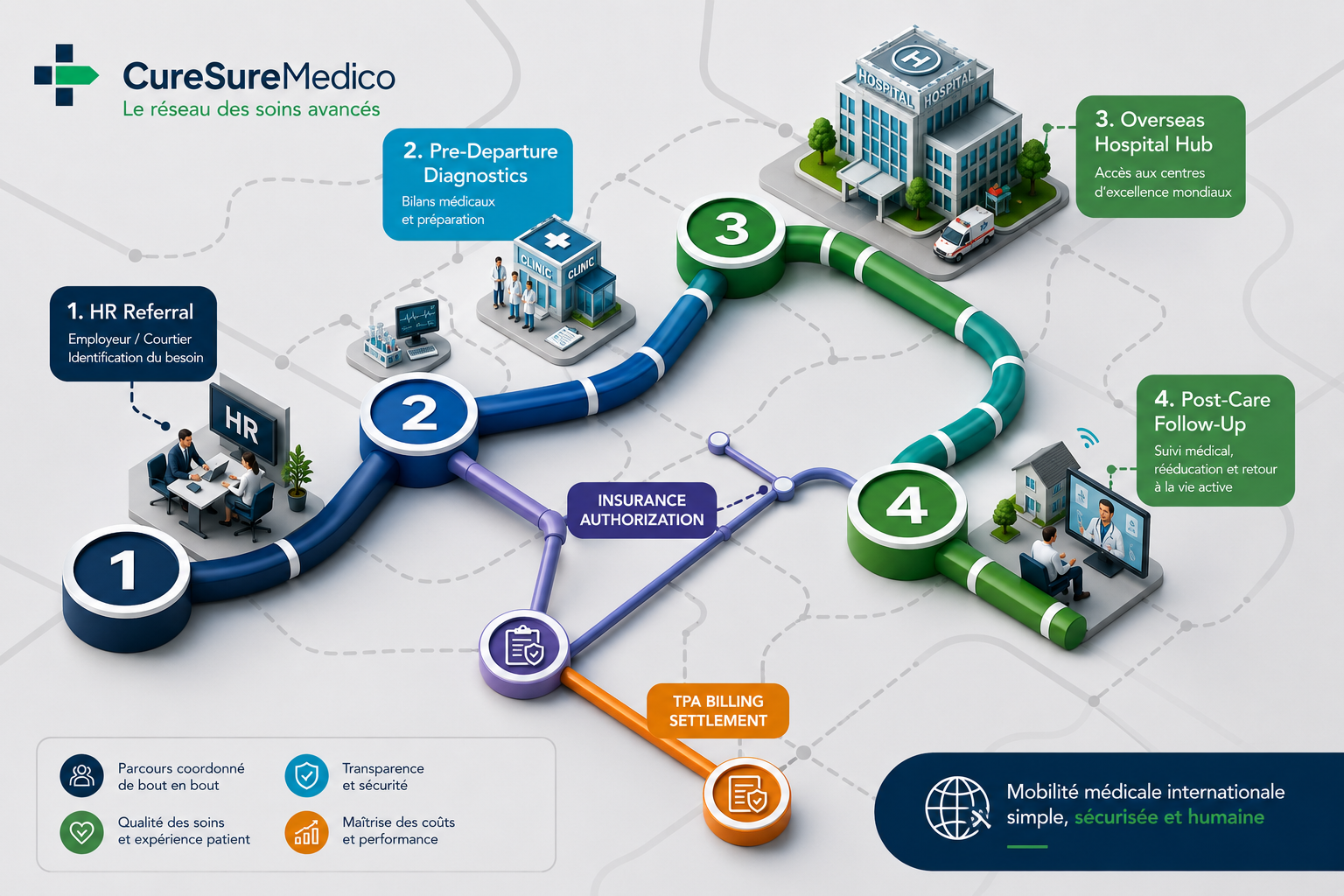
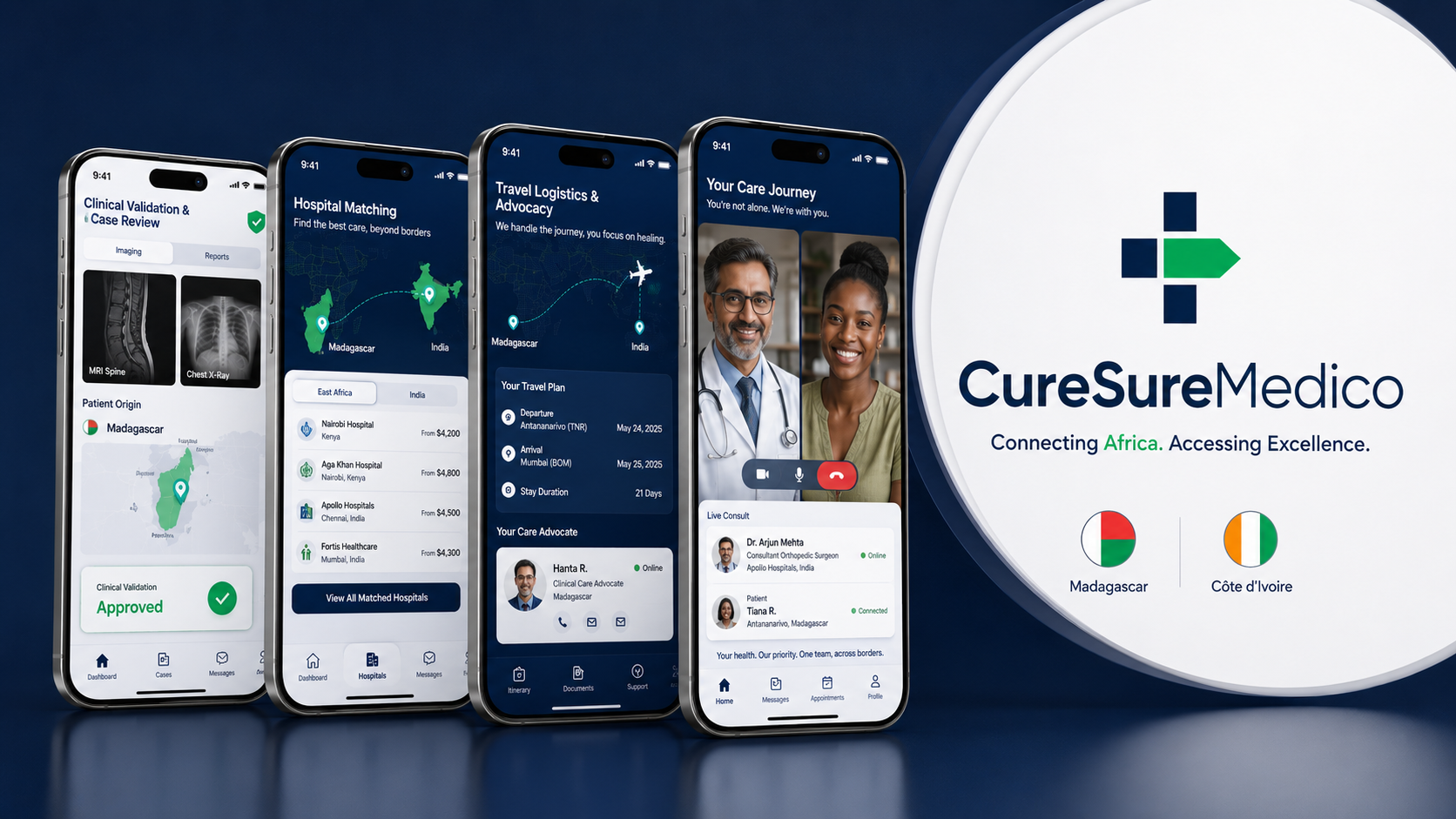
Receiving a kidney transplant in another country requires careful organization. Beyond the surgery itself, patients need to prepare medical tests, choose a specialized center, arrange travel, and ensure follow-up after returning home. CureSureMedico supports African patients throughout this pathway to facilitate access to recognized transplant centers.
Independent review of the medical file, referral to experienced specialists, coordination with partner hospitals, scheduling of consultations and surgery, support with administrative steps and medical travel, accommodation arrangements when needed, preparation for the return home, and continuity of care with referring physicians.
This coordination allows the patient to follow a clear, secure, and personalized pathway while limiting administrative burden.
Our team is involved at every step:
Why Early Care Matters
A transplant performed at the right time can durably improve quality of life and reduce complications linked to end-stage chronic kidney disease.
An early evaluation also helps identify a compatible living donor, prepare for surgery under the best conditions, avoid certain complications linked to prolonged dialysis, and optimize the chances of a successful transplant.
The earlier a transplant is planned, the better the recovery outlook tends to be.
Access Kidney Transplantation at a Specialized Center
A kidney transplant is a complex procedure that requires an experienced team, multidisciplinary care, and long-term follow-up.
At CureSureMedico, we support African patients at every stage of their international care pathway, from initial evaluation through follow-up after returning home. Contact our team to organize your kidney transplant at a recognized center.
Frequently Asked Questions
How long can a transplanted kidney function?
A graft's lifespan varies depending on several factors, including donor type, the patient's health, and adherence to treatment. On average, a kidney from a living donor functions for 15 to 20 years, compared with 10 to 15 years for a graft from a deceased donor. In some patients, these durations are far exceeded thanks to excellent medical follow-up.
Can you live a normal life after a kidney transplant?
Yes. After the recovery period, many patients return to work, travel, and resume normal family life. However, adherence to treatment and follow-up appointments remains essential.
Is a transplant better than dialysis?
When possible, kidney transplantation generally offers a better quality of life, greater independence, and better life expectancy than dialysis. However, the choice depends on each patient's health status.
Who can donate a kidney?
The donor can be a family member, a spouse, or a compatible relative. In some countries, altruistic donation is also permitted under local law.
Can a donor live normally with one kidney?
Yes. After the necessary medical evaluation, a living donor can lead a normal life with one kidney. Regular medical follow-up is still recommended.
How does CureSureMedico support African patients?
CureSureMedico coordinates the international care pathway for its patients: medical file review, referral to specialized centers, travel arrangements, coordination with medical teams, and support after returning home to ensure continuity of care.