
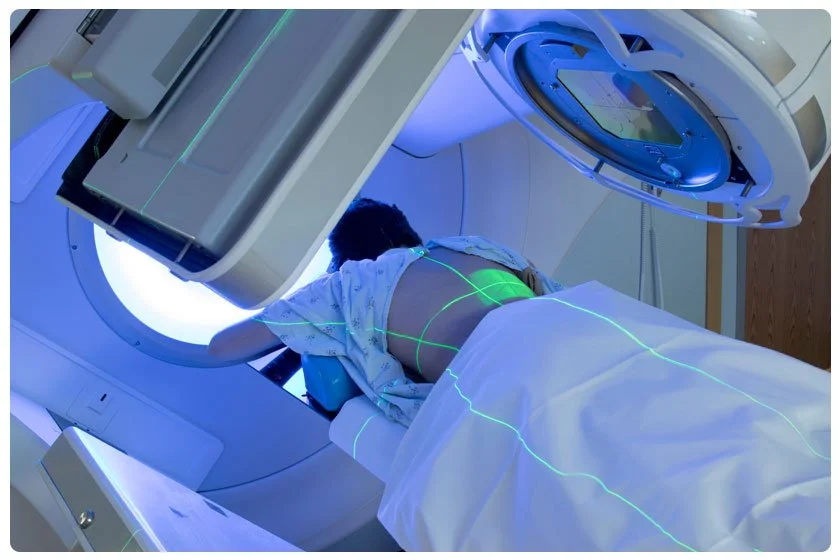
Proton Beam Therapy
Oncology
Starting from
$25,000
Up to $95,000 depending on centre
Typical duration
14–42 days
Including pre-operative work-up

Content reviewed for medical accuracy by: Dr. Rodina Ainasoa · Medical Content Writer & Health Communications
Overview
Advanced proton-based radiation therapy that uses the Bragg-peak physics of proton beams to concentrate radiation dose precisely on the tumor while minimizing exit dose to surrounding healthy tissue. Internationally accredited proton centers offer this specialized modality for skull-base tumors, pediatric cancers, and select re-irradiation cases at a fraction of Western costs.
Your case is matched to a centre on the basis of clinical outcome data, not marketing. We coordinate every step — from pre-operative work-up to post-treatment follow-up — with a dedicated care coordinator.
What's included
Proton Beam Therapy
Coordinated from
or message us on WhatsApp
No commitment required. Your data is never shared with third parties.
Proton Beam Therapy vs. Conventional Photon (IMRT) Radiotherapy
Both are forms of external-beam radiation therapy used to treat tumors without incisions, but they deposit their radiation dose differently in the body. A radiation oncologist selects the modality based on tumor type, location, proximity to critical structures, and whether minimizing dose to surrounding healthy tissue is a priority — this is a clinical decision, not a self-selected option.
| Parameter | Proton Beam Therapy | Conventional Photon (IMRT) Radiotherapy |
|---|---|---|
| How the dose is deposited | Protons release most of their energy at a defined depth (the 'Bragg peak') and then stop, so there is little to no exit dose beyond the tumor. | Photon (X-ray) beams deposit dose as they enter and continue to deposit a reduced dose as they exit the body, beyond the tumor target. |
| Dose to surrounding healthy tissue | Generally lower integral dose to nearby healthy tissue and organs, which is why proton therapy is often favored for tumors near critical structures such as the brainstem, spinal cord, or eye. | Modern IMRT and VMAT techniques shape dose closely to the tumor, but some radiation still passes through healthy tissue beyond and around the target. |
| Typical tumor types treated | Skull-base and spinal chordomas and chondrosarcomas, ocular melanoma, pediatric brain and spinal tumors, and select re-irradiation cases where prior radiotherapy limits further photon exposure. | The great majority of adult cancers, including breast, lung, head and neck, prostate, and many other solid tumors, where outcomes with photon-based IMRT/VMAT are well established. |
| Availability and cost | Available at a limited number of specialized centers worldwide, using large cyclotron or synchrotron equipment; typically a higher cost per course of treatment. | Widely available at radiation oncology centers globally, using linear accelerators (LINACs); generally lower cost and shorter wait times. |
| Evidence base for outcome benefit | Strong evidence of benefit for pediatric tumors and skull-base/spinal tumors; for many common adult cancers, comparative trials against modern photon therapy are still ongoing, per National Cancer Institute and ASTRO model policy guidance. | Decades of published outcome data across nearly all tumor types, with well-characterized long-term side-effect profiles. |
The Treatment Process: Step by Step
The steps below outline the general process for proton beam therapy; your radiation oncology team will confirm the specific plan based on your tumor type, location, and overall treatment goals.
Simulation and imaging
A planning CT scan, often combined with MRI, maps the tumor and surrounding structures in detail, and a custom immobilization device (mask or mold) is made to keep you in the exact same position for every session.
Treatment planning
A medical physicist and radiation oncologist use the imaging to design a plan — commonly using pencil-beam scanning, which paints the tumor with a scanned proton beam layer by layer — that concentrates dose on the tumor while sparing nearby healthy tissue.
Daily treatment sessions
Treatment is typically delivered once a day, five days a week, over several weeks depending on tumor type; each session itself usually takes 15 to 30 minutes, most of which is positioning, with the actual beam delivery lasting only a few minutes.
On-treatment monitoring
Your radiation oncology team checks your position and side effects regularly throughout the course, using periodic imaging to confirm the tumor and your anatomy have not shifted from the original plan.
Treatment Course & Follow-Up Timeline
Most proton therapy courses run daily on weekdays for 1 to 6 weeks depending on tumor type; fatigue and localized skin or mucosal irritation at the treatment site are the most common effects during this period.
Acute side effects such as skin redness, fatigue, and site-specific irritation (for example, mouth soreness for head and neck tumors) typically peak shortly after treatment ends and then gradually resolve.
Follow-up imaging and clinical review assess early tumor response and confirm resolution of acute side effects; some tumors, particularly slower-growing ones, take longer to show a measurable response on imaging.
Long-term surveillance imaging and specialist follow-up (endocrinology, ophthalmology, or neurology, depending on tumor site) continues for years, since some late effects and tumor control status take time to become apparent.
Source: MD Anderson Cancer Center and Mayo Clinic proton therapy patient education materials; National Cancer Institute (NCI) and American Society for Radiation Oncology (ASTRO) proton beam therapy model policy and clinical literature indexed on PubMed/PMC. Individual timelines vary and are guided by your treating team.
Known Risks & Limitations
- Fatigue is common during a course of proton therapy and typically builds gradually over the treatment weeks, resolving over the weeks following completion.
- Site-specific effects occur depending on the treatment area — for example, skin irritation over the treated field, mouth or throat soreness for head and neck tumors, or nausea for abdominal targets — and are generally managed with supportive care during treatment.
- Although proton therapy reduces exit dose beyond the tumor, it is not risk-free: entrance-side tissue still receives a significant dose, and rare but recognized long-term risks (such as radiation-induced effects on nearby organs) remain possible, as with any radiation therapy.
- Proton therapy is not the appropriate or evidence-supported choice for every tumor type — for many common adult cancers, modern photon-based IMRT/VMAT achieves comparable outcomes, so treatment selection should be made by a radiation oncology team weighing tumor type, location, and available evidence rather than chosen by the patient in advance.
- Access is limited by geography and cost: proton therapy is delivered at a relatively small number of specialized centers worldwide, and per the American Society for Radiation Oncology (ASTRO), insurance coverage and out-of-pocket cost vary considerably depending on the diagnosis and country.
Source: American Society for Radiation Oncology (ASTRO) proton beam therapy model policy, National Cancer Institute (NCI), Mayo Clinic, and MD Anderson Cancer Center patient education materials; peer-reviewed radiation oncology literature indexed on PubMed/PMC. No radiation therapy pathway is without risk; your treating team will review your individual risk factors before recommending an approach.
The CureSureMedico Care Pathway
Remote clinical review
Share your diagnostic imaging (CT/MRI/PET), pathology report, and any prior treatment records already available. Our coordination team forwards your case to a radiation oncologist at a specialized proton therapy center for initial review before you travel.
Suitability and modality review
The receiving radiation oncology team reviews your tumor type, location, and proximity to critical structures to confirm whether proton beam therapy offers a meaningful advantage over conventional photon radiotherapy for your specific case.
Consolidated treatment plan and estimate
A cost estimate covering simulation, planning, the full course of daily sessions, and accommodation for the treatment duration is issued before you travel, with the expected number of weeks and likely side effects explained clearly.
Treatment course and on-site monitoring
During the daily treatment course, your radiation oncology team monitors your side effects and treatment response, adjusting supportive care as needed until the full planned course is complete.
Discharge planning and oncology handover
A detailed treatment summary and follow-up imaging schedule is prepared for your home oncology team, since surveillance for tumor control and any late effects continues for years after treatment ends.
Global cost comparison — Proton Beam Therapy
Average coordinated costs across our partner centres. Final pricing depends on clinical complexity and chosen hospital.
| Country | Avg. cost | vs. cheapest |
|---|---|---|
🇮🇳 India New Delhi · Chennai · Bengaluru · Hyderabad · Mumbai · Kochi | $28,000 | —chevron_right |
🇯🇵 JP | $65,000 | +132% |
🇹🇷 Turkey Istanbul | $45,000 | +61%chevron_right |
Costs are indicative estimates and vary by procedure specifics, hospital, and clinical complexity. Request a personalised estimate for your specific case.
Frequently asked questions
Proton therapy is most clearly beneficial for tumors near critical structures (such as skull-base and spinal chordomas, ocular melanoma, and pediatric brain or spinal tumors) and for select re-irradiation cases, per National Cancer Institute and ASTRO guidance. For many common adult cancers, modern photon-based IMRT/VMAT achieves comparable outcomes, so a radiation oncologist reviews your tumor type, location, and imaging to confirm whether proton therapy offers a meaningful advantage in your specific case.
No fees. No commitment.
Our guidance is completely free
We are compensated by our partner hospitals — never by patients. You get independent clinical matching, cost transparency, and end-to-end coordination at no cost to you.