
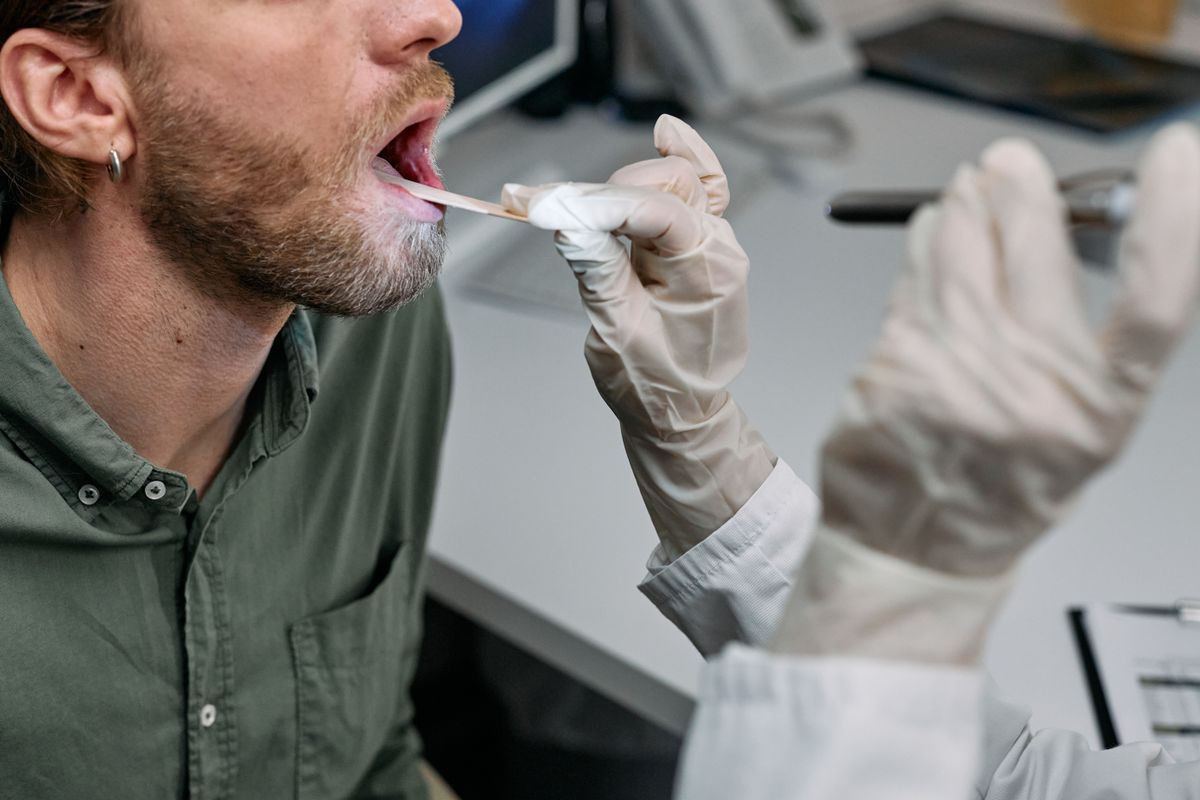
Oral Cancer Surgery
Oncology
Starting from
$8,000
Up to $25,000 depending on centre
Typical duration
10–21 days
Including pre-operative work-up

Content reviewed for medical accuracy by: Dr. Rodina Ainasoa · Medical Content Writer & Health Communications
Overview
Oral cancer surgery is the surgical resection of malignant tumours of the oral cavity and oropharynx — including the tongue, floor of mouth, buccal mucosa, and tongue base — followed by reconstruction to restore speech, swallowing, and appearance. This is a distinct oncologic-resection pathway from general maxillofacial/trauma surgery, combining tumour removal, neck dissection where indicated, and microvascular free-flap reconstruction at high-volume international cancer centres for a fraction of Western pricing.
Your case is matched to a centre on the basis of clinical outcome data, not marketing. We coordinate every step — from pre-operative work-up to post-treatment follow-up — with a dedicated care coordinator.
What's included
Oral Cancer Surgery
Coordinated from
or message us on WhatsApp
No commitment required. Your data is never shared with third parties.
Who Is a Candidate for Oral Cancer Surgery?
Candidacy for surgical resection of an oral cavity or oropharyngeal cancer depends on tumour location, size, depth of invasion, and whether the cancer has spread to lymph nodes in the neck — assessed through biopsy, imaging (MRI/CT/PET), and multidisciplinary tumour board review, per the American Head and Neck Society (AHNS).
- Biopsy-confirmed oral squamous cell carcinoma of the tongue, floor of mouth, buccal mucosa, or tongue base, staged with cross-sectional imaging (MRI/CT) and often PET-CT to assess nodal and distant spread, per AHNS
- Tumour resectable with clear surgical margins without unacceptable functional loss, confirmed by a head and neck surgical oncologist
- Assessment of the neck for lymph node involvement, which determines whether neck dissection is performed alongside the primary resection, per Mayo Clinic
- Overall fitness for a lengthy operation and, where free-flap reconstruction is planned, suitability of donor sites (forearm, thigh, or fibula), reviewed by the multidisciplinary tumour board
Standard Open Resection vs. Transoral Robotic Surgery (TORS)
Most oral cavity cancers — including buccal mucosa, floor of mouth, and anterior tongue tumours — are resected via a standard transoral (open) approach because these sites are already directly accessible through the mouth. Transoral Robotic Surgery (TORS), FDA-cleared since 2009, is instead used for select, harder-to-reach sites such as the tongue base and posterior oropharynx, where it can avoid a jaw-splitting (mandibulotomy) approach.
| Parameter | Standard Open Resection | Transoral Robotic Surgery (TORS) |
|---|---|---|
| What it is | Direct surgical removal of the tumour through the mouth or, for larger/posterior tumours, via an open surgical approach, with margins confirmed by pathology, per Mayo Clinic. | A robotic surgical system (e.g. da Vinci) provides magnified 3D visualisation and wristed instruments to resect select tumours transorally without splitting the jaw, per the American Head and Neck Society. |
| Typical subsites treated | Anterior tongue, floor of mouth, buccal mucosa, and any oral cavity site directly reachable and resectable through the mouth. | Primarily tongue base and select oropharyngeal sites; FDA clearance covers T1–T2 tumours of the oral cavity, oropharynx, and larynx, but robotic assistance adds the most value at posterior sites that are harder to reach with standard instruments. |
| Stage suitability | Used across all resectable stages, including larger and more locally advanced tumours requiring wider access. | Generally limited to early-stage (T1–T2) tumours without extensive invasion of cartilage, deep muscle, or surrounding structures, per AHNS. |
| Access & scarring | May require a lip-split or jaw-splitting (mandibulotomy) incision for posterior tumours, leaving external scarring in some cases. | Performed entirely through the mouth with no external incision for the resection itself, avoiding mandibulotomy in eligible cases, per AHNS. |
| Availability | Widely available at hospitals with head and neck surgical oncology capability. | Offered at fewer centres — requires a head and neck robotic surgical platform and a surgeon with specific robotic case experience. |
Source: American Head and Neck Society (AHNS); Mayo Clinic. TORS is not appropriate for all oral cancer types or stages — your tumour board will confirm whether your specific tumour is a genuine candidate.
Reconstruction Options
The reconstructive approach depends on how much tissue is removed and which structures are affected. Larger resections typically require microvascular free-flap reconstruction to restore form and function.
Radial Forearm Free Flap
A thin, pliable flap of skin and tissue from the forearm, commonly used to reconstruct the tongue or floor of mouth after resection, restoring mobility for speech and swallowing.
Fibula Free Flap
Bone and soft tissue from the lower leg (fibula), used to reconstruct the jaw after mandibulectomy, allowing for later dental implant placement.
Anterolateral Thigh (ALT) Free Flap
A versatile flap providing a larger volume of soft tissue, used for reconstructing more extensive resections of the tongue, floor of mouth, or buccal mucosa.
Recovery Timeline
Patients undergoing free-flap reconstruction are monitored in an ICU or high-dependency unit to check flap viability (blood supply) closely during the initial recovery period.
Transfer to the general ward; a feeding tube is commonly used while swallowing function is assessed and speech and swallowing therapy begins.
Most patients are medically cleared to fly home once wound healing and flap viability are confirmed and swallowing function is adequate, per typical head and neck oncology discharge pathways.
Continued speech and swallowing rehabilitation, with adjuvant radiation or chemotherapy coordinated with the home-country oncology team if recommended by pathology results.
Source: American Head and Neck Society (AHNS); Mayo Clinic. Individual recovery varies with resection extent and reconstruction type, and is guided by your surgical oncology team.
Known Risks & Limitations
- General surgical risks include bleeding, infection, and anaesthesia-related complications, alongside risks specific to head and neck surgery such as airway compromise, per Mayo Clinic.
- Free-flap reconstruction carries a risk of flap failure (loss of blood supply), which is why close monitoring in the early post-operative period is standard practice.
- Functional changes to speech, swallowing, and appearance are possible depending on the extent of resection, even with successful reconstruction; a speech and language therapist supports rehabilitation.
- TORS is not appropriate for all oral cancer types or stages — it is not broadly indicated for anterior oral cavity sites such as buccal mucosa or floor of mouth, and larger or more invasive tumours still require open resection, per AHNS.
- Adjuvant radiation or chemotherapy may be recommended after surgery depending on final pathology (margins and nodal status), which is coordinated with your home-country oncology team.
Source: American Head and Neck Society (AHNS); Mayo Clinic; NCBI/StatPearls. No procedure is without risk; your multidisciplinary tumour board will review your individual case.
Treatment approaches
Standard and robotic-assisted Oral Cancer Surgery
Standard Approach
Standard Open Resection
10–21 days
Robotic-Assisted Option
Transoral Robotic Surgery (TORS)
8–16 days
Comparing the two approaches
| Standard | Robotic-Assisted | |
|---|---|---|
| Procedure | Standard Open Resection | Transoral Robotic Surgery (TORS) |
| Technology | Conventional surgical instruments | Robotic-assisted surgical system with surgeon oversight |
| Availability | Hospital-dependent | Selected hospitals with robotic capability |
| Specialist | Procedure specialist | Specialist with relevant robotic experience |
| Clinical suitability | Case-dependent | Case-dependent |
| Tariff | $8,000–$25,000 | $12,000–$28,000 |
| Duration | 10–21 days | 8–16 days |
Eligibility for robotic-assisted treatment
- Select early-stage (T1–T2) oral cavity and oropharyngeal cancers — most commonly tongue base and posterior oropharyngeal tumours — confirmed on imaging and endoscopy as reachable and fully resectable through the mouth without splitting the jaw
- No extensive invasion into cartilage, deep muscle, or surrounding structures that would require an open approach for adequate access and margins; TORS is not broadly used for anterior oral cavity sites such as buccal mucosa or floor of mouth, which are usually already directly accessible by standard transoral resection
- Multidisciplinary tumour board review confirming candidacy, including tumour size, location, depth of invasion, and nodal status
- Availability of a head and neck robotic surgical platform and a surgeon experienced specifically in robotic oral/oropharyngeal resection at your selected hospital — this is offered at fewer centres than standard open resection
Risks and limitations of robotic-assisted surgery
- Robotic assistance does not eliminate the risks of oral cancer surgery, including bleeding, airway compromise, and the possible need for a temporary feeding tube
- The head and neck surgical oncologist remains responsible for the procedure and oncologic margins; robotic guidance is an aid, not a substitute for surgical judgement
- TORS is a narrower option than for oropharyngeal tumours generally — it is not appropriate for all oral cancer types or stages, and larger or more locally advanced tumours still require open resection
- Availability depends heavily on the individual hospital and the treating surgeon's specific robotic case volume, and the surgeon may need to convert to an open approach if tumour extent is greater than expected on initial assessment
Tariff structure
Why can robotic-assisted procedures cost more?
Robotic-assisted procedures rely on additional technology and equipment beyond the standard operating platform and clinical team. This additional technology component is generally not included in standard case pricing.
Is robotic-assisted surgery always recommended?
No. Robotic-assisted surgery is not appropriate for every procedure or patient. Availability and suitability are determined by the treating specialist, based on your imaging, clinical condition, and the treating hospital's capabilities.
Global cost comparison — Oral Cancer Surgery
Average coordinated costs across our partner centres. Final pricing depends on clinical complexity and chosen hospital.
| Country | Avg. cost | vs. cheapest |
|---|---|---|
🇮🇳 India New Delhi · Chennai · Bengaluru · Hyderabad · Mumbai · Kochi | $11,000 | —chevron_right |
🇹🇷 Turkey Istanbul | $16,000 | +45%chevron_right |
🇹🇭 Thailand Bangkok · Phuket · Chiang Mai | $14,000 | +27%chevron_right |
Costs are indicative estimates and vary by procedure specifics, hospital, and clinical complexity. Request a personalised estimate for your specific case.
Frequently asked questions
Maxillofacial and oral surgery (jaw realignment, wisdom teeth, facial trauma repair) addresses non-cancerous, structural, or traumatic conditions of the jaw and face. Oral cancer surgery is a distinct oncologic pathway: it involves the surgical resection of a malignant tumour — most commonly squamous cell carcinoma of the tongue, floor of mouth, or buccal mucosa — with wide margins to remove all cancerous tissue, often combined with neck dissection to check for lymph node spread, and microvascular free-flap reconstruction to rebuild the resected area. The surgical team, staging workup, and follow-up pathway (including possible radiation or chemotherapy) are entirely different from routine maxillofacial procedures.
No fees. No commitment.
Our guidance is completely free
We are compensated by our partner hospitals — never by patients. You get independent clinical matching, cost transparency, and end-to-end coordination at no cost to you.