
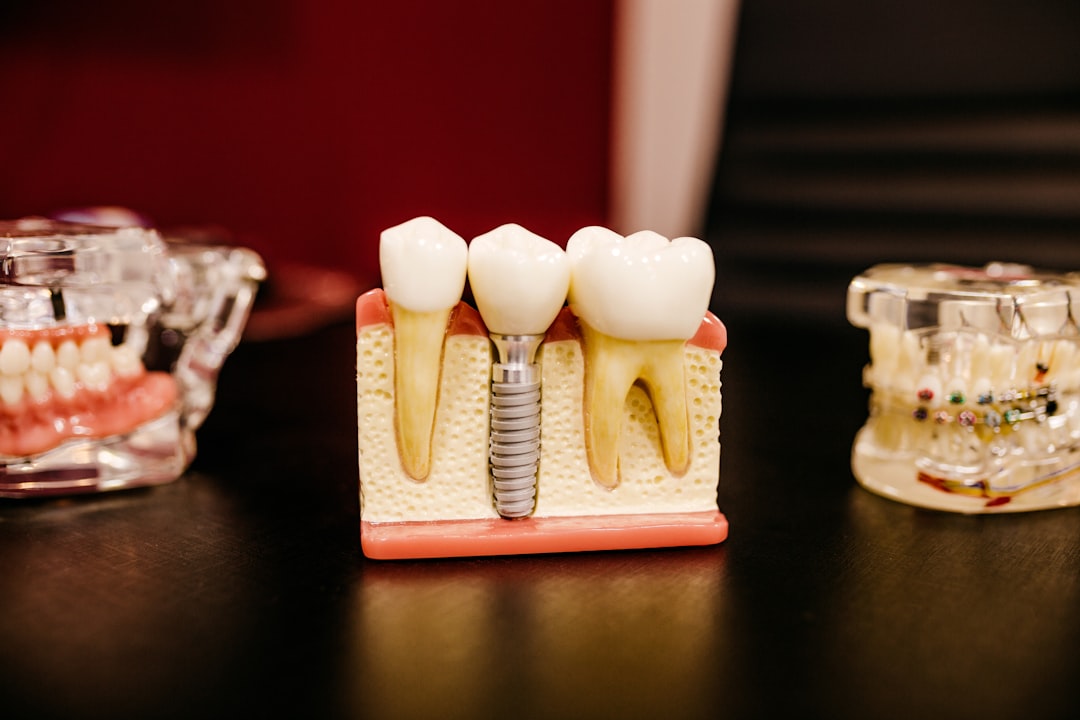
Guided Implant Surgery
Dental
Starting from
$800
Up to $12,000 depending on centre
Typical duration
5–14 days
Including pre-operative work-up

Content reviewed for medical accuracy by: Dr. Rodina Ainasoa · Medical Content Writer & Health Communications
Overview
Guided implant surgery uses a 3D CT/CBCT scan of your jaw to digitally plan the exact position, angle, and depth of each implant before surgery, then transfers that plan to the mouth using a custom 3D-printed surgical guide or real-time navigation. It is a technology-led placement workflow that can be used for routine single-tooth cases as well as complex multi-implant and full-arch reconstructions, offering greater planning precision than traditional freehand placement.
Your case is matched to a centre on the basis of clinical outcome data, not marketing. We coordinate every step — from pre-operative work-up to post-treatment follow-up — with a dedicated care coordinator.
What's included
Guided Implant Surgery
Coordinated from
or message us on WhatsApp
No commitment required. Your data is never shared with third parties.
Guided vs. Freehand Implant Placement
Guided implant surgery digitally plans the exact position, angle, and depth of each implant on a 3D CT/CBCT scan before surgery, then transfers that plan into the mouth using a 3D-printed surgical guide or real-time navigation. Freehand placement relies on the surgeon's direct visualisation and experience during surgery. Here is how systematic reviews and meta-analyses of implant-dentistry literature compare the two.
| Parameter | Guided Placement | Freehand Placement |
|---|---|---|
| Placement accuracy | Meta-analyses report smaller deviations from the pre-planned implant position, with static guided surgery showing platform deviations of roughly 1-2.3mm and dynamic navigation-guided surgery roughly 0.6-1.7mm in pooled data. | Freehand placement showed larger deviations from the planned position in the same pooled data, ranging roughly 1.4-3.5mm, though outcomes vary with surgeon experience. |
| Complication risk | An umbrella review of systematic reviews found guided techniques may reduce iatrogenic (procedure-related) risk, particularly in complex cases, though the difference was not statistically significant in pooled data. | No statistically significant difference from guided surgery was found for mechanical or biological complication rates in the same pooled analyses when performed by experienced clinicians. |
| Best suited for | Cases where precise angulation matters most — near nerves or the sinus, limited bone volume, full-arch or multi-implant reconstructions, and flapless procedures. | Straightforward single-tooth cases with ample bone volume, performed by an experienced implant surgeon comfortable working without a digital plan. |
| Long-term survival and bone loss | Implant survival and marginal bone loss were comparable to freehand placement in pooled long-term data, both remaining high. | Implant survival and marginal bone loss were comparable to guided placement in the same pooled data — freehand placement remains a reliable, well-established technique. |
| Planning and chair time | Requires an additional digital planning appointment and, for static guides, time to fabricate the custom 3D-printed guide before surgery; surgical time itself can be shorter once the guide is in hand. | No separate digital planning appointment is needed, but the surgeon relies entirely on intraoperative judgement without a fabricated guide or live navigation overlay. |
The Procedure: Step by Step
The steps below outline a typical static (3D-printed guide) guided implant workflow. Your dentist or oral surgeon will confirm whether a static or dynamic (real-time navigation) approach best suits your case.
3D CBCT scan and digital planning
A cone-beam CT (CBCT) scan of your jaw is taken and loaded into implant-planning software, where your dentist maps the ideal position, angle, and depth for each implant relative to bone volume, nerves, and adjacent teeth.
Surgical guide fabrication or navigation setup
For static guidance, the digital plan is used to 3D-print a custom surgical guide with pre-set drill channels; for dynamic guidance, the plan is loaded into a chairside navigation system that tracks instruments in real time instead of a physical guide.
Guided implant placement surgery
Under local anaesthesia, the implant is placed following the surgical guide's drill channels or the on-screen navigation overlay, closely matching the pre-operative digital plan.
Abutment and crown fitting
As with any implant, once osseointegration is confirmed after the healing period, an abutment is attached and a custom-made permanent crown or prosthesis is fitted to complete the restoration.
Robotic-Assisted Option
Guided surgery (a digital plan delivered via a printed guide or on-screen navigation) is distinct from true robotic-assisted implant placement. The Yomi system (Neocis) is an FDA-cleared robotic navigation system that provides haptic, real-time guidance of the drill itself based on the pre-operative digital plan. It is a genuine, separately available option at select clinics with the system installed, rather than a variant of static guide-based surgery.
Recovery Timeline
Swelling and minor discomfort are common, similar to freehand placement; guided flapless procedures may involve a smaller incision, which can mean somewhat less initial swelling in some cases.
Stick to soft foods and avoid disturbing the surgical site while any stitches dissolve or are removed; most initial surgical healing resolves within one to two weeks, as with any implant surgery.
This is the osseointegration period during which the jawbone fuses to the implant — the same biological healing timeline as freehand placement, since guided surgery affects planning and placement precision, not the underlying bone-healing process.
Once the permanent crown is fitted, a guided-placement implant functions like any other implant-supported tooth, requiring routine dental check-ups and regular cleaning around the implant.
Source: Journal of Periodontal Research (Reiff et al., systematic review and meta-analysis); umbrella review of systematic reviews and meta-analyses, International Journal of Oral & Maxillofacial Surgery. Individual recovery varies and is guided by your treating dentist or oral surgeon.
Known Risks & Limitations
- Guided surgery improves planning precision but does not eliminate all risk: published meta-analyses found no statistically significant difference from freehand surgery in mechanical or biological complication rates when freehand placement is performed by an experienced clinician.
- A surgical guide or navigation system depends on an accurate CBCT scan and correct guide fit or calibration; guide slippage, poor seating, or navigation-registration error can reduce the real-world accuracy advantage over freehand placement.
- Static guides require a lead time to design and 3D-print before surgery, and some designs limit intraoperative flexibility if the surgeon needs to deviate from the digital plan mid-procedure.
- As with any implant surgery, infection, prolonged bleeding, nerve irritation, or an adverse reaction to anaesthesia are recognised but uncommon risks, independent of whether a guided or freehand technique is used.
- Long-term implant survival and marginal bone loss have been found comparable between guided and freehand placement in pooled long-term data, so guided surgery is a precision-planning tool rather than a guarantee of a better long-term outcome.
Source: Journal of Periodontal Research; International Journal of Oral & Maxillofacial Surgery systematic reviews. No procedure is without risk; your treating dentist or oral surgeon will review your individual case.
The CureSureMedico Care Pathway
Remote case review
Share your dental X-rays or CBCT scan and missing-tooth details with our coordination team, who forward your case for an initial review of whether a static guide or dynamic navigation workflow best suits your anatomy.
Clinic and technology matching
We match you with an accredited implant clinic that offers guided surgery, confirming whether they use a static 3D-printed guide, dynamic real-time navigation, or the Yomi robotic-assisted system.
Digital planning and cost estimate
A consolidated cost estimate is issued covering the CBCT scan, digital planning session, guide fabrication (if static) or navigation setup fee (if dynamic), and the surgery itself.
Guided placement visit
You attend your CBCT scan and digital planning appointment, then the guided implant placement surgery, before returning home to heal while osseointegration takes place over the following months.
Follow-up and final crown fitting
Once osseointegration is confirmed, typically several months later, you travel back for the permanent crown or prosthesis fitting, and your records are shared with your home-country dentist for ongoing care.
Treatment approaches
Standard and robotic-assisted Guided Implant Surgery
Standard Approach
treatmentRoboticComparison.guided-implant-surgery.standardApproachName
5–14 days
Robotic-Assisted Option
treatmentRoboticComparison.guided-implant-surgery.roboticApproachName
5–14 days
Comparing the two approaches
| Standard | Robotic-Assisted | |
|---|---|---|
| Procedure | treatmentRoboticComparison.guided-implant-surgery.standardApproachName | treatmentRoboticComparison.guided-implant-surgery.roboticApproachName |
| Technology | Conventional surgical instruments | Robotic-assisted surgical system with surgeon oversight |
| Availability | Hospital-dependent | Selected hospitals with robotic capability |
| Specialist | Procedure specialist | Specialist with relevant robotic experience |
| Clinical suitability | Case-dependent | Case-dependent |
| Tariff | $800–$12,000 | $800–$12,000 |
| Duration | 5–14 days | 5–14 days |
Eligibility for robotic-assisted treatment
- treatmentRoboticComparison.guided-implant-surgery.eligibilityBullet0
- treatmentRoboticComparison.guided-implant-surgery.eligibilityBullet1
- treatmentRoboticComparison.guided-implant-surgery.eligibilityBullet2
- treatmentRoboticComparison.guided-implant-surgery.eligibilityBullet3
Risks and limitations of robotic-assisted surgery
- treatmentRoboticComparison.guided-implant-surgery.riskBullet0
- treatmentRoboticComparison.guided-implant-surgery.riskBullet1
- treatmentRoboticComparison.guided-implant-surgery.riskBullet2
- treatmentRoboticComparison.guided-implant-surgery.riskBullet3
Tariff structure
Why can robotic-assisted procedures cost more?
Robotic-assisted procedures rely on additional technology and equipment beyond the standard operating platform and clinical team. This additional technology component is generally not included in standard case pricing.
Is robotic-assisted surgery always recommended?
No. Robotic-assisted surgery is not appropriate for every procedure or patient. Availability and suitability are determined by the treating specialist, based on your imaging, clinical condition, and the treating hospital's capabilities.
Global cost comparison — Guided Implant Surgery
Average coordinated costs across our partner centres. Final pricing depends on clinical complexity and chosen hospital.
| Country | Avg. cost | vs. cheapest |
|---|---|---|
🇮🇳 India New Delhi · Chennai · Bengaluru · Hyderabad · Mumbai · Kochi | $1,600 | —chevron_right |
🇹🇷 Turkey Istanbul | $3,000 | +88%chevron_right |
🇹🇭 Thailand Bangkok · Phuket · Chiang Mai | $2,600 | +63%chevron_right |
Costs are indicative estimates and vary by procedure specifics, hospital, and clinical complexity. Request a personalised estimate for your specific case.
Frequently asked questions
Guided surgery is increasingly used for routine single-tooth and multi-tooth cases, not just complex ones, because the digital planning step lets the dentist verify the ideal implant position relative to bone volume, adjacent teeth, and nerve or sinus structures before any incision is made. It is particularly valued for complex or full-arch cases and cases near critical anatomy, but many clinics now offer it as their standard workflow for most implant patients.
No fees. No commitment.
Our guidance is completely free
We are compensated by our partner hospitals — never by patients. You get independent clinical matching, cost transparency, and end-to-end coordination at no cost to you.