
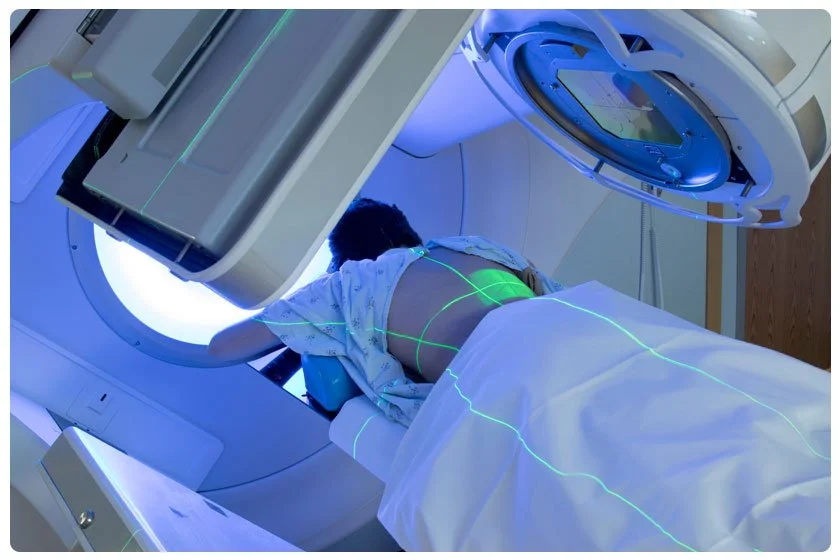
CyberKnife Radiosurgery
Oncology
Starting from
$8,000
Up to $28,000 depending on centre
Typical duration
3–10 days
Including pre-operative work-up

Content reviewed for medical accuracy by: Dr. Rodina Ainasoa · Medical Content Writer & Health Communications
Overview
A frameless, robotic stereotactic radiosurgery platform that uses real-time image-guided tumour tracking to deliver high-dose, highly conformal radiation to cranial lesions and, unlike frame-based systems such as Gamma Knife, to moving extracranial targets — including lung, liver, spine, and pancreatic tumours — without a rigid head frame or invasive fixation.
Your case is matched to a centre on the basis of clinical outcome data, not marketing. We coordinate every step — from pre-operative work-up to post-treatment follow-up — with a dedicated care coordinator.
What's included
CyberKnife Radiosurgery
Coordinated from
or message us on WhatsApp
No commitment required. Your data is never shared with third parties.
What Makes CyberKnife Different
CyberKnife is a frameless robotic stereotactic radiosurgery system: a compact linear accelerator mounted on a robotic arm delivers highly focused radiation while an integrated imaging system tracks the tumor in real time throughout treatment. That real-time tracking — not just the robotic arm itself — is what lets CyberKnife treat cranial lesions without a rigid head frame and extend to moving extracranial targets that frame-based systems such as Gamma Knife cannot reach.
Frameless Cranial Treatment
Brain tumors, acoustic neuromas, and trigeminal neuralgia can be treated without the rigid, pin-fixed head frame that frame-based systems require, since the imaging system continuously verifies head position and the robotic arm compensates for small movements during treatment.
Fiducial-Guided Body Tracking
For soft-tissue targets that move — lung, liver, and pancreatic tumors — small gold or metal fiducial markers are placed near the tumor beforehand, giving the imaging system a precise landmark to track as the tumor shifts with breathing or organ motion.
Respiratory Motion Synchronization
A dedicated respiratory-tracking capability correlates the tumor's position with the patient's breathing cycle in real time, allowing the beam to follow a moving lung or liver tumor accurately without requiring breath-holding or abdominal compression.
Spinal Radiosurgery
Bony spinal landmarks visible on imaging allow accurate targeting of spinal tumors and metastases close to the spinal cord, often without the need for implanted fiducials, delivering ablative doses while sparing the cord.
Multi-Session Fractionation
Unlike a single-session approach, CyberKnife commonly delivers the prescribed dose across one to five sessions on separate days, which can allow treatment of larger tumors or those close to critical structures while managing radiation exposure to healthy tissue.
The Treatment Process: Step by Step
The process below applies broadly across cranial and extracranial targets; your radiation oncologist and the multidisciplinary tumor board confirm the specific plan, number of fractions, and whether fiducial markers are needed for your tumor.
Imaging, staging, and tumor board review
High-resolution CT, and often MRI or PET, imaging is reviewed by a multidisciplinary tumor board — including the radiation oncologist, medical physicist, and relevant specialist — to confirm CyberKnife is an appropriate option and to define the treatment target.
Fiducial placement (extracranial targets)
For lung, liver, spine, or pancreatic tumors, a short outpatient procedure places a small number of fiducial markers in or near the tumor under image guidance, allowing the system to track the target once treatment begins.
Treatment planning simulation
A planning CT scan (with fusion to MRI or PET where relevant) is used to map the tumor and surrounding structures, and medical physicists design a dose plan that shapes radiation tightly around the target from many robotic-arm angles.
Image-guided delivery across sessions
During each session, the system takes frequent images to locate the tumor or its fiducials, automatically adjusts the robotic arm's aim to compensate for any movement, and delivers the planned dose — typically over one to five sessions on separate days.
Recovery & Follow-Up Timeline
Each session is non-invasive and delivered without anaesthesia, typically lasting 30 to 90 minutes; most patients go home the same day and can resume light activity almost immediately.
Mild fatigue or localized irritation at the treated site (such as mild skin changes for spine or lung targets) can occur and is usually managed with simple measures; significant pain is uncommon given the non-invasive nature of treatment.
The biological effect of radiosurgery continues to develop over weeks after the sessions end, which is why symptom relief or tumor response is not always immediate, particularly for larger lesions.
Follow-up imaging (CT, MRI, or PET depending on the treated site) is scheduled to confirm tumor response and monitor for the recognised delayed effects of radiosurgery, on a schedule set by your radiation oncology and home care team.
Source: Accuray CyberKnife clinical and technical literature (cited cautiously); peer-reviewed literature on the CyberKnife robotic radiosurgery system indexed on PubMed/PMC; Mayo Clinic and StatPearls patient education materials on stereotactic radiosurgery. Individual timelines vary and are guided by your treating team.
Known Risks & Limitations
- As with any radiation therapy, there is a risk of damage to healthy tissue near the treated target, and side effects depend heavily on the treated site — for example, fatigue and skin changes for lung or spine targets, or nausea for upper-abdominal targets such as the liver or pancreas.
- Fiducial marker placement for extracranial targets is itself a minor invasive procedure with a small associated risk of bleeding, infection, or (for lung markers) a collapsed lung, though this is uncommon.
- Not every tumor is a good candidate for CyberKnife — size, number, and proximity to structures that cannot tolerate a high radiation dose (such as bowel near a pancreatic tumor) determine candidacy, which is why a multidisciplinary tumor board reviews imaging before recommending the approach rather than a patient self-selecting it.
- Radiosurgery is a local treatment: it treats the targeted lesion but does not address cancer elsewhere in the body, so it is often combined with systemic therapy or surveillance imaging for tumors with a risk of spread.
- Delayed radiation effects — such as radiation-induced inflammation of nearby tissue — can occur weeks to months after treatment and are a recognised, monitored risk of any form of stereotactic radiosurgery, not a sign that the treatment failed.
Source: Accuray CyberKnife clinical and technical literature (cited cautiously); peer-reviewed stereotactic radiosurgery outcome studies indexed on PubMed/PMC; Mayo Clinic patient education materials. No treatment pathway is without risk; your treating team will review your individual risk factors before recommending an approach.
The CureSureMedico Care Pathway
Remote clinical review
Share your recent imaging (CT/MRI/PET), pathology report, and oncology history. Our coordination team forwards your case to a radiation oncologist and the relevant tumor board for initial review before you travel.
Multidisciplinary treatment planning
The receiving tumor board confirms whether CyberKnife is appropriate for your specific tumor and location, whether fiducial markers are needed, and how many sessions are planned, taking into account nearby critical structures.
Consolidated treatment plan and estimate
A cost estimate covering consultation, imaging, fiducial placement where needed, and the planned CyberKnife sessions is issued before you travel, with the expected timeline and risks explained clearly.
Treatment sessions
You attend the planned one to five outpatient sessions on separate days, with the treatment team monitoring tracking accuracy and your comfort throughout each session.
Follow-up imaging and oncology handover
A discharge summary and follow-up imaging schedule is prepared for your home oncology team, since confirming tumor response and monitoring for delayed effects continues well after you return home.
Global cost comparison — CyberKnife Radiosurgery
Average coordinated costs across our partner centres. Final pricing depends on clinical complexity and chosen hospital.
| Country | Avg. cost | vs. cheapest |
|---|---|---|
🇮🇳 India New Delhi · Chennai · Bengaluru · Hyderabad · Mumbai · Kochi | $9,500 | —chevron_right |
🇹🇷 Turkey Istanbul | $16,000 | +68%chevron_right |
🇹🇭 Thailand Bangkok · Phuket · Chiang Mai | $14,000 | +47%chevron_right |
Costs are indicative estimates and vary by procedure specifics, hospital, and clinical complexity. Request a personalised estimate for your specific case.
Frequently asked questions
Gamma Knife uses a fixed array of cobalt-60 sources and requires a rigid head frame screwed to the skull to keep a cranial target perfectly still, so it treats brain lesions only. CyberKnife mounts a compact linear accelerator on a robotic arm and continuously tracks the tumour with real-time imaging during treatment, so no head frame is needed and it can also track moving extracranial targets — such as lung, liver, spine, and pancreatic tumours — that shift with breathing or organ motion.
No fees. No commitment.
Our guidance is completely free
We are compensated by our partner hospitals — never by patients. You get independent clinical matching, cost transparency, and end-to-end coordination at no cost to you.