
VT Ablation (Ventricular Tachycardia)
Cardiology
Starting from
$8,000
Up to $20,000 depending on centre
Typical duration
6–12 days
Including pre-operative work-up

Content reviewed for medical accuracy by: Dr. Rodina Ainasoa · Medical Content Writer & Health Communications
Overview
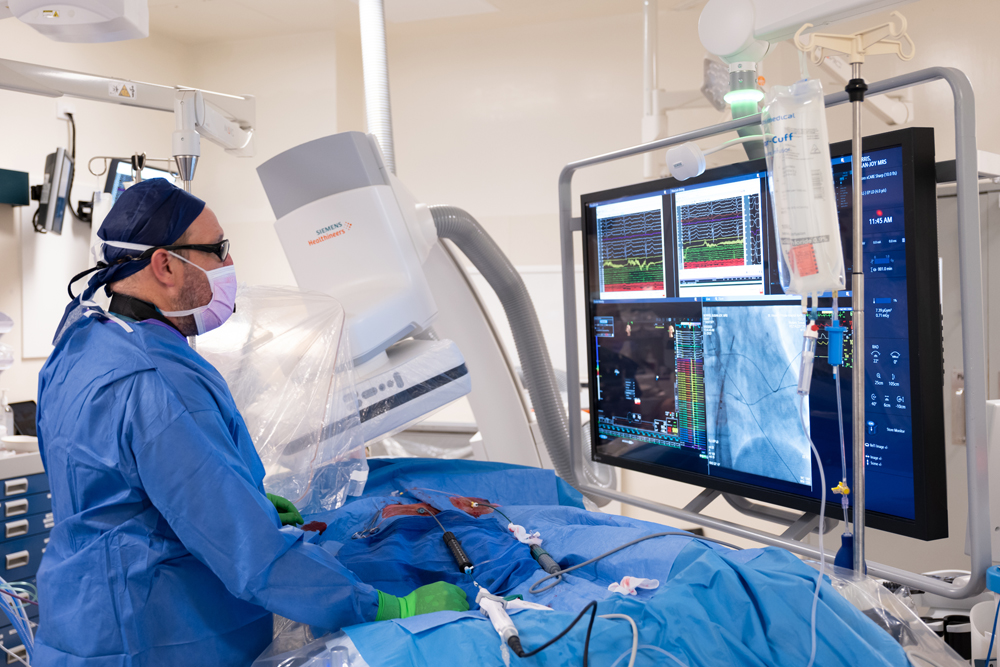
Ventricular tachycardia (VT) catheter ablation targets and eliminates the abnormal electrical scar circuits in the heart's ventricles that cause life-threatening fast heart rhythms. Unlike AFib or SVT ablation, VT ablation is typically performed in patients with structural heart disease (prior heart attack, cardiomyopathy) and often in those who already have an implantable defibrillator (ICD) firing for recurrent VT, making it a higher-complexity, higher-risk procedure requiring advanced 3D electroanatomical mapping and sometimes epicardial (outside-the-heart) access. JCI-accredited electrophysiology centres in India and Turkey offer high-density mapping-guided VT ablation with experienced structural-VT teams at a fraction of US/UK costs.
Your case is matched to a centre on the basis of clinical outcome data, not marketing. We coordinate every step — from pre-operative work-up to post-treatment follow-up — with a dedicated care coordinator.
What's included
VT Ablation (Ventricular Tachycardia)
Coordinated from
or message us on WhatsApp
No commitment required. Your data is never shared with third parties.
Who Is a Candidate for VT Ablation?
VT ablation is generally considered for patients with recurrent or drug-refractory ventricular tachycardia, most often in the setting of structural heart disease. Candidacy is determined by a cardiac electrophysiology team — not by patient self-assessment — based on imaging, arrhythmia history, and ICD data where applicable.
- Recurrent monomorphic ventricular tachycardia despite antiarrhythmic medication, particularly in patients with prior heart attack scarring or cardiomyopathy.
- Frequent ICD shocks or anti-tachycardia pacing for VT, where ablation aims to reduce arrhythmia burden and device therapies.
- Ischemic or non-ischemic cardiomyopathy with a mappable, scar-related VT circuit confirmed on cardiac MRI, CT, or prior electrophysiology study.
- VT storm (multiple VT episodes in a short period) requiring specialised, often urgent, electrophysiology intervention beyond medication alone.
Source: Heart Rhythm Society / EHRA-HRS-APHRS-LAHRS epicardial VT consensus statement; American College of Cardiology. Candidacy is a clinical electrophysiology-team decision, not a self-assessment.
The Procedure: Step by Step
VT ablation is a catheter-based electrophysiology procedure performed under general anaesthesia or deep sedation, typically longer and more involved than AFib/SVT ablation because the arrhythmia circuit is embedded in scarred heart muscle.
Vascular access and mapping catheter placement
Catheters are introduced through the femoral vein (and sometimes artery) and guided into the heart chambers using 3D electroanatomical mapping (CARTO or EnSite NavX).
Substrate and scar mapping
The electrophysiology team maps the scar border zone using activation, entrainment, pace, or substrate mapping techniques to identify the critical circuit sustaining the VT.
Endocardial — or, if needed, epicardial — ablation
Radiofrequency energy is delivered to the identified circuit from inside the heart (endocardial). If the scar is mid-myocardial or on the heart's outer surface, a separate pericardial (epicardial) access is used to reach and ablate it.
Confirm non-inducibility and close
The team attempts to re-induce VT to confirm the circuit is eliminated, then withdraws the catheters and closes the access sites; ICD settings are checked and reprogrammed if needed before discharge.
Recovery Timeline
Most patients spend one to three days in a monitored cardiac unit or ICU, longer than typical AFib/SVT ablation, for rhythm observation.
Hospital discharge typically occurs within a week, once rhythm stability is confirmed and any epicardial access site has healed.
Most everyday activity resumes within two to four weeks; return to strenuous activity is guided by the underlying heart disease as much as the ablation itself.
Follow-up includes ICD data review and rhythm monitoring at 30 days, with continued surveillance over the following months given the underlying structural heart disease.
Source: Heart Rhythm Society / EHRA-HRS-APHRS-LAHRS epicardial VT consensus statement; NCBI/StatPearls. Individual recovery varies and is guided by your electrophysiology team.
Known Risks & Limitations
- VT ablation in structural heart disease carries higher procedural risk than AFib/SVT ablation, including bleeding, vascular injury, and cardiac perforation, per NCBI/StatPearls.
- Epicardial (pericardial) access, when required, adds risks including pericardial bleeding, coronary artery injury, and phrenic nerve injury, per the EHRA-HRS-APHRS-LAHRS consensus statement.
- VT may recur or remain only partially controlled after a single procedure, particularly with extensive or deep myocardial scar; a repeat ablation is sometimes needed.
- The underlying structural heart disease and pre-existing ICD are not resolved by ablation — most patients continue to need their defibrillator as a safety backup afterward.
- General anaesthesia and hemodynamic instability during VT induction/mapping carry their own procedural risks, weighed by the electrophysiology team against continued medication or ICD-only management.
Source: Heart Rhythm Society / EHRA-HRS-APHRS-LAHRS epicardial VT consensus statement; American College of Cardiology; NCBI/StatPearls. No procedure is without risk; a specialised electrophysiology team reviews your individual anatomy and arrhythmia history before recommending VT ablation — this is a clinical decision, not a self-assessment.
Global cost comparison — VT Ablation (Ventricular Tachycardia)
Average coordinated costs across our partner centres. Final pricing depends on clinical complexity and chosen hospital.
| Country | Avg. cost | vs. cheapest |
|---|---|---|
🇮🇳 India New Delhi · Chennai · Bengaluru · Hyderabad · Mumbai · Kochi | $9,000 | —chevron_right |
🇹🇷 Turkey Istanbul | $14,000 | +56%chevron_right |
Costs are indicative estimates and vary by procedure specifics, hospital, and clinical complexity. Request a personalised estimate for your specific case.
Frequently asked questions
VT ablation is generally more complex and carries higher procedural risk than AFib or SVT ablation because it is usually performed in patients with underlying structural heart disease, such as prior heart attack scarring or cardiomyopathy, rather than in an otherwise structurally normal heart. The abnormal circuits are often located deep in scar tissue or on the heart's outer (epicardial) surface, requiring longer procedure times, high-density mapping, and sometimes pericardial access — with correspondingly higher rates of major complications than typical AFib/SVT cases.
No fees. No commitment.
Our guidance is completely free
We are compensated by our partner hospitals — never by patients. You get independent clinical matching, cost transparency, and end-to-end coordination at no cost to you.