
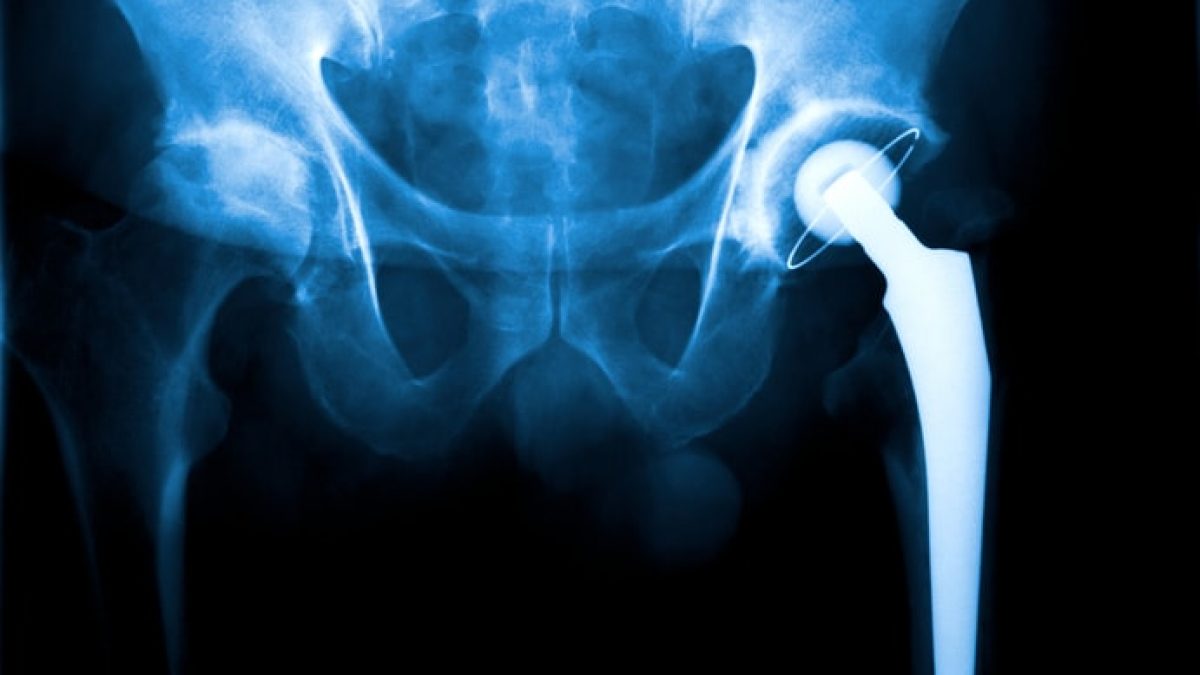
Revision Hip Replacement
Orthopedics
Starting from
$9,000
Up to $28,000 depending on centre
Typical duration
10–21 days
Including pre-operative work-up

Content reviewed for medical accuracy by: Dr. Rodina Ainasoa · Medical Content Writer & Health Communications
Overview
Re-operation to remove and replace a failed, worn, or loosened primary hip implant — addressing implant loosening, periprosthetic infection, recurrent dislocation, osteolysis, or a fracture around a prior prosthesis. Revision surgery is more complex than a first-time hip replacement and requires a surgeon experienced in complex hip reconstruction and specialised revision implant systems.
Your case is matched to a centre on the basis of clinical outcome data, not marketing. We coordinate every step — from pre-operative work-up to post-treatment follow-up — with a dedicated care coordinator.
What's included
Revision Hip Replacement
Coordinated from
or message us on WhatsApp
No commitment required. Your data is never shared with third parties.
Aseptic Revision vs. Two-Stage (Infection) Revision
Not all revision hip surgeries follow the same path. When the implant has loosened or worn without infection (aseptic), it is usually replaced in a single operation. When infection is present, a two-stage approach — removing the implant, treating the infection, then re-implanting — is generally the standard of care. Your surgeon confirms the cause and the right approach through imaging, blood tests, and joint fluid analysis.
| Parameter | Aseptic (Single-Stage) Revision | Septic (Two-Stage) Revision |
|---|---|---|
| Number of operations | One operation to remove and replace the failed component(s) | Two operations: implant removal with an antibiotic spacer, then re-implantation weeks later |
| Time between stages | Not applicable | Typically 2–8 weeks of intravenous antibiotics between stages |
| Most common cause | Implant loosening, wear-related osteolysis, dislocation, or periprosthetic fracture | Confirmed periprosthetic joint infection |
| Reported success rate | Favourable long-term outcomes for pain relief and stability in most patients | Published series report infection-free survivorship above 90% at 2 years with an articulating antibiotic spacer |
| Overall recovery | Slower than a first-time hip replacement, but a single recovery period | Longest recovery pathway of the two, due to the staged surgery and antibiotic course |
The Procedure: Step by Step
The exact steps depend on why the original implant failed and whether infection is present. The stages below describe a standard aseptic revision.
Remove the failed implant
The surgeon exposes the hip and carefully removes the loosened, worn, or fractured component(s) — the acetabular cup, femoral stem, or both — along with any damaged bone or scar tissue.
Assess and prepare the bone
Remaining bone is assessed for loss (osteolysis) and prepared to securely hold the new components, sometimes with bone graft or metal augments where bone stock is reduced.
Implant the revision components
Specialised revision implants — often longer stems or larger cups than a primary implant — are fitted to achieve a stable, well-fixed reconstruction.
Close and confirm stability
The surgeon checks joint stability and range of motion before closing, to reduce the risk of the dislocation that can prompt revision surgery in the first place.
Recovery Timeline
Revision surgery generally takes longer than a primary hip replacement, per AAOS OrthoInfo, given the complexity of removing prior components and reconstructing bone.
Recovery after revision is usually slower than after a primary hip replacement, per AAOS OrthoInfo, though the type of post-operative care is very similar — physiotherapy and gradual return to activity.
For infected implants treated with a two-stage approach, this is the typical window of intravenous antibiotic therapy with an antibiotic spacer in place before re-implantation.
Most patients experience favourable long-term outcomes including pain relief, improved stability, and better function, though — per AAOS OrthoInfo — it is not always possible to completely relieve pain or fully restore function after revision surgery.
Source: American Academy of Orthopaedic Surgeons — OrthoInfo (Revision Total Hip Replacement); published two-stage revision / periprosthetic joint infection outcome studies. Individual recovery varies.
Known Risks & Limitations
- The most common reasons for revision are prosthesis instability/dislocation and periprosthetic fracture, per AAOS OrthoInfo data on revision total hip replacement.
- Blood clots and infection remain key risks during the first several weeks of recovery, and careful adherence to post-operative instructions helps reduce them.
- Revision surgery carries a higher complexity and complication profile than a first-time hip replacement, given prior scar tissue, bone loss, and, in some cases, retained hardware.
- It is not always possible to completely relieve pain or restore full function after revision surgery — outcomes vary by cause, bone quality, and number of prior revisions.
- Two-stage revision for infection requires two separate operations and a prolonged antibiotic course, extending overall treatment time and recovery compared with a single-stage revision.
Source: American Academy of Orthopaedic Surgeons — OrthoInfo. No surgery is without risk; your surgeon will review your individual risk profile before you consent to treatment.
The CureSureMedico Care Pathway
Remote clinical review
Share X-rays/MRI, prior surgical records, and symptom history. Our coordination team confirms candidacy and matches you with a surgeon experienced in complex hip revision.
Hospital matching & estimate
A consolidated cost estimate covering surgery, revision implants, hospital stay, and physiotherapy — including staged treatment if infection is suspected — is issued before travel.
Travel & pre-operative work-up
On arrival, imaging, blood work, and (where relevant) joint aspiration confirm the cause of failure and finalise the surgical plan before admission.
Surgery & early recovery
In-hospital recovery with physiotherapy and mobility support, followed by discharge once safe movement milestones are met.
Continuity of care post-return
Discharge summary and rehab plan are shared with a local physiotherapist for continued recovery at home.
Treatment approaches
Standard and robotic-assisted Revision Hip Replacement
Standard Approach
Standard (Manual) Revision Hip Replacement
10–21 days
Robotic-Assisted Option
Robotic-Assisted Revision Hip Replacement
10–21 days
Comparing the two approaches
| Standard | Robotic-Assisted | |
|---|---|---|
| Procedure | Standard (Manual) Revision Hip Replacement | Robotic-Assisted Revision Hip Replacement |
| Technology | Conventional surgical instruments | Robotic-assisted surgical system with surgeon oversight |
| Availability | Hospital-dependent | Selected hospitals with robotic capability |
| Specialist | Procedure specialist | Specialist with relevant robotic experience |
| Clinical suitability | Case-dependent | Case-dependent |
| Tariff | $9,000–$28,000 | $11,000–$33,000 |
| Duration | 10–21 days | 10–21 days |
Eligibility for robotic-assisted treatment
- Sufficient remaining bone stock and implant/anatomy confirmed on CT-based preoperative planning as suitable for robotic-guided component removal and positioning
- No extensive bone loss or complex reconstruction (e.g. major structural bone grafting) that would exceed the current evidence base for robotic-assisted revision
- Multidisciplinary review confirming candidacy, including the cause of the original implant's failure and whether infection is present
- Availability of a robotic surgical platform and a surgeon with specific experience in robotic revision hip surgery at your selected hospital — offered at a very limited number of centres, since robotic systems are far more established for primary hip replacement than for revision
Risks and limitations of robotic-assisted surgery
- Robotic assistance does not eliminate the risks of revision hip surgery, including infection, dislocation, fracture, and nerve or vessel injury
- The surgeon remains responsible for implant removal, bone assessment, and reconstruction; robotic guidance is an aid to planning and positioning, not a substitute for surgical judgement
- Robotic-assisted revision hip and knee arthroplasty is an emerging application, described in a 2025 scoping review as still building its evidence base — it is a narrower, less-established use of robotic technology than robotic-assisted primary hip replacement
- Availability is limited to a small number of specialist centres, and the surgeon may still need to convert to a fully manual technique if bone loss or hardware removal is more extensive than expected
Tariff structure
Why can robotic-assisted procedures cost more?
Robotic-assisted procedures rely on additional technology and equipment beyond the standard operating platform and clinical team. This additional technology component is generally not included in standard case pricing.
Is robotic-assisted surgery always recommended?
No. Robotic-assisted surgery is not appropriate for every procedure or patient. Availability and suitability are determined by the treating specialist, based on your imaging, clinical condition, and the treating hospital's capabilities.
Global cost comparison — Revision Hip Replacement
Average coordinated costs across our partner centres. Final pricing depends on clinical complexity and chosen hospital.
| Country | Avg. cost | vs. cheapest |
|---|---|---|
🇮🇳 India New Delhi · Chennai · Bengaluru · Hyderabad · Mumbai · Kochi | $12,000 | —chevron_right |
🇹🇷 Turkey Istanbul | $17,500 | +46%chevron_right |
🇹🇭 Thailand Bangkok · Phuket · Chiang Mai | $20,000 | +67%chevron_right |
Costs are indicative estimates and vary by procedure specifics, hospital, and clinical complexity. Request a personalised estimate for your specific case.
Frequently asked questions
The most common reasons are aseptic loosening of the implant over time, periprosthetic infection, recurrent dislocation, wear-related osteolysis (bone loss around the implant), and fractures of the bone around a prior prosthesis. Your surgeon will confirm the cause through imaging, blood tests, and sometimes joint fluid analysis before planning the revision.
No fees. No commitment.
Our guidance is completely free
We are compensated by our partner hospitals — never by patients. You get independent clinical matching, cost transparency, and end-to-end coordination at no cost to you.