
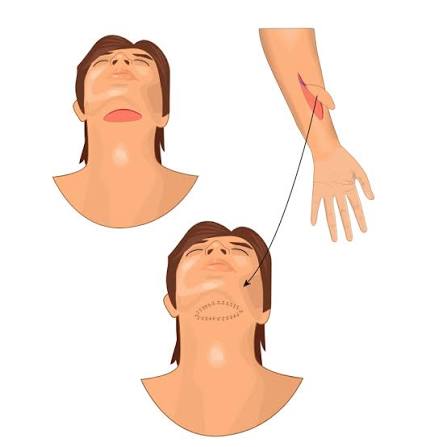
Maxillofacial Reconstruction
Plastic Surgery
Starting from
$8,000
Up to $35,000 depending on centre
Typical duration
14–30 days
Including pre-operative work-up
Content reviewed for medical accuracy by: Dr. Rodina Ainasoa · Medical Content Writer & Health Communications
Overview
Maxillofacial reconstruction restores facial bone and soft-tissue structures lost to severe trauma, tumour resection, or congenital defects — using techniques such as bone grafting, microvascular free-flap transfer, distraction osteogenesis, and orthognathic reconstruction. This is major reconstructive microsurgery distinct from routine oral/trauma surgery, requiring a craniomaxillofacial or plastic reconstructive surgeon and a multidisciplinary team, available internationally at a fraction of Western pricing.
Your case is matched to a centre on the basis of clinical outcome data, not marketing. We coordinate every step — from pre-operative work-up to post-treatment follow-up — with a dedicated care coordinator.
What's included
Maxillofacial Reconstruction
Coordinated from
or message us on WhatsApp
No commitment required. Your data is never shared with third parties.
Who Is a Candidate for Maxillofacial Reconstruction?
Maxillofacial reconstruction is considered for patients with significant facial bone or soft-tissue loss from trauma, tumour resection, or congenital defects, where restoring form and function requires more than routine repair — assessed by a craniomaxillofacial or reconstructive plastic surgeon working with a multidisciplinary team, per the American Society of Plastic Surgeons (ASPS).
- Composite facial defects following resection of a head and neck tumour, where bone, soft tissue, or both must be replaced to restore appearance and function, per ASPS
- Severe facial trauma with bone loss or comminuted fractures beyond standard fixation, such as high-energy injuries or gunshot wounds
- Congenital craniofacial deformities (e.g. hemifacial microsomia) where staged bone lengthening or grafting can improve facial symmetry and function
- Sufficient overall fitness for a lengthy reconstructive operation and, where free-flap transfer is planned, suitable donor sites (fibula, forearm, or thigh), confirmed by the surgical team
Reconstructive Techniques
The technique chosen depends on the size and type of defect, the tissues involved, and whether reconstruction is immediate or staged.
Bone Grafting
Bone (often from the hip or another donor site) is used to rebuild smaller jaw or facial bone defects, restoring structural continuity and providing a base for later dental implants where needed.
Free Flap Reconstruction
Bone and/or soft tissue with its own blood supply (commonly from the fibula, forearm, or thigh) is transferred microsurgically and reconnected to vessels in the face or neck, used for larger composite defects.
Distraction Osteogenesis
A surgically placed device gradually lengthens a bone segment over weeks, allowing new bone to form in the gap — used for staged correction of jaw or facial bone deficiencies, particularly in congenital cases.
Orthognathic Reconstruction
Realignment and reconstruction of the jaw skeleton itself, often combined with grafting or flap techniques, to restore bite function and facial proportion after major bone loss.
Recovery Timeline
Patients undergoing free-flap reconstruction are monitored in an ICU or high-dependency unit to check the flap's blood supply closely, since flap failure risk is highest in this early window, per ASPS.
Transfer to the general ward; wound care, swelling management, and early mobilisation continue as healing progresses.
Most patients are medically cleared to fly home once wound healing and flap viability are confirmed, though total in-country stay depends on reconstruction complexity.
Continued soft-tissue healing, with staged revision procedures (contour refinement, dental implant placement after bone grafting, or scar revision) planned once initial healing is complete.
Source: American Society of Plastic Surgeons (ASPS); NCBI/StatPearls; peer-reviewed craniomaxillofacial surgery literature. Individual recovery varies with defect extent and reconstruction type.
Known Risks & Limitations
- General surgical risks include bleeding, infection, and anaesthesia-related complications, alongside risks specific to major facial reconstruction, per ASPS.
- Free-flap reconstruction carries a risk of flap failure (loss of blood supply), which is why close post-operative monitoring is standard practice.
- Functional or aesthetic changes are possible depending on the extent of the original defect, even with successful reconstruction; a multidisciplinary team supports rehabilitation.
- Complex reconstructions are often staged — a single surgery may not achieve the final result, and additional revision procedures may be needed over months.
- Robotic-assisted microvascular anastomosis for free-flap reconstruction remains an emerging research technique with longer operative times than conventional microsurgery, and is not yet established as standard of care.
Source: American Society of Plastic Surgeons (ASPS); NCBI/StatPearls; peer-reviewed craniomaxillofacial surgery literature. No procedure is without risk; your surgical team will review your individual case.
Global cost comparison — Maxillofacial Reconstruction
Average coordinated costs across our partner centres. Final pricing depends on clinical complexity and chosen hospital.
| Country | Avg. cost | vs. cheapest |
|---|---|---|
🇮🇳 India New Delhi · Chennai · Bengaluru · Hyderabad · Mumbai · Kochi | $12,000 | —chevron_right |
🇹🇷 Turkey Istanbul | $18,000 | +50%chevron_right |
🇹🇭 Thailand Bangkok · Phuket · Chiang Mai | $16,000 | +33%chevron_right |
Costs are indicative estimates and vary by procedure specifics, hospital, and clinical complexity. Request a personalised estimate for your specific case.
Frequently asked questions
General maxillofacial and oral surgery covers procedures like jaw realignment, wisdom tooth removal, and routine fracture repair. Maxillofacial reconstruction is a distinct, larger-scale category: rebuilding facial bone and soft tissue after major loss from tumour resection, severe trauma, or congenital defects, typically using bone grafts, microvascular free flaps, or staged distraction osteogenesis. It requires a craniomaxillofacial or reconstructive plastic surgeon working with a multidisciplinary team, rather than a general oral surgeon.
No fees. No commitment.
Our guidance is completely free
We are compensated by our partner hospitals — never by patients. You get independent clinical matching, cost transparency, and end-to-end coordination at no cost to you.