
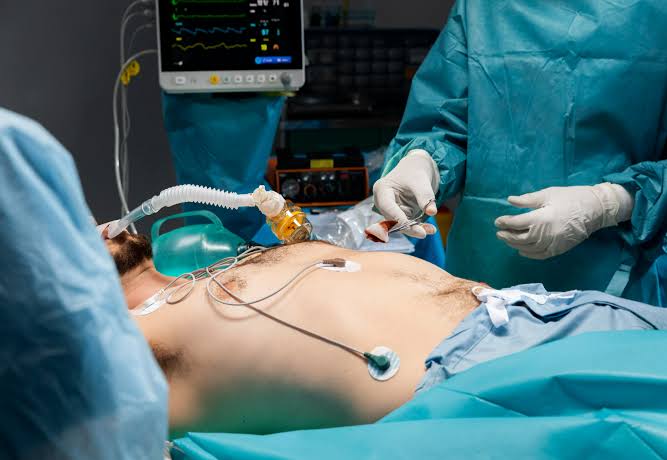
LVAD (Left Ventricular Assist Device) Implantation
Cardiology
Starting from
$55,000
Up to $120,000 depending on centre
Typical duration
21–35 days
Including pre-operative work-up

Content reviewed for medical accuracy by: Dr. Rodina Ainasoa · Medical Content Writer & Health Communications
Overview
A left ventricular assist device is a mechanical pump surgically implanted to help a severely weakened heart circulate blood, used either as a bridge to heart transplantation or as long-term destination therapy for patients with advanced heart failure who are not transplant candidates. Select high-volume international heart-failure programs offer LVAD implantation and lifelong device management at a fraction of US pricing, though this program is concentrated in fewer advanced centres than most cardiac procedures.
Your case is matched to a centre on the basis of clinical outcome data, not marketing. We coordinate every step — from pre-operative work-up to post-treatment follow-up — with a dedicated care coordinator.
What's included
LVAD (Left Ventricular Assist Device) Implantation
Coordinated from
or message us on WhatsApp
No commitment required. Your data is never shared with third parties.
Standard (Sternotomy) vs. Minimally Invasive LVAD Implantation
LVAD implantation can be performed through a full median sternotomy or, in selected patients, through a less invasive thoracotomy approach. Which approach is appropriate is determined by your heart-failure surgical team based on anatomy, prior chest surgery, and whether a concomitant valve procedure is needed — never a self-assessment.
| Parameter | Standard (Full Sternotomy) | Minimally Invasive (Thoracotomy) |
|---|---|---|
| Surgical access | Full median sternotomy provides complete access to the heart, allowing any needed concomitant valve repair or other cardiac procedure at the same time. | A smaller left thoracotomy incision avoids splitting the breastbone but offers more limited access, which can restrict concomitant valve procedures, per published surgical comparisons. |
| Operative time | Generally shorter total operative time in published comparative studies. | Reported as up to roughly 23% longer implant time than full sternotomy in a peer-reviewed comparative study, though experienced centres narrow this gap. |
| Bleeding & driveline infection | Higher published rates of reoperation for bleeding and driveline infection compared with the minimally invasive approach in some cohorts. | Selected studies report fewer reoperations for bleeding and a lower incidence of driveline infection, per a peer-reviewed systematic review of minimally invasive LVAD implantation. |
| Survival & suitability | Well-established long-term outcomes data across the widest range of patients, including those needing simultaneous valve repair. | Comparable short- and mid-term survival in selected, carefully evaluated patients, with an association with more tricuspid regurgitation and volume-overload readmissions in some series, per peer-reviewed research; not yet supported by the same volume of long-term data as full sternotomy. |
Source: peer-reviewed comparative studies of median sternotomy vs. thoracotomy LVAD implantation (PubMed 33740155, 30443997) and a peer-reviewed systematic review of minimally invasive LVAD implantation outcomes. No approach is without trade-offs; your surgical team will confirm which is appropriate for you.
The Procedure: Step by Step
The description below outlines the general LVAD implantation process. Your heart-failure surgical team will confirm the specific steps and approach for your case.
Pre-operative evaluation & candidacy assessment
A multidisciplinary heart-failure team evaluates cardiac function via echocardiography and right heart catheterization, overall health, and whether the goal is bridge-to-transplant or destination therapy, per the American Heart Association and NCBI/StatPearls.
Anaesthesia & surgical access
Under general anaesthesia and typically using cardiopulmonary bypass, the surgeon accesses the heart through a median sternotomy or, in selected patients, a thoracotomy approach, per StatPearls.
Pump implantation & connection
The pump is attached to the tip of the left ventricle and its outflow graft is connected to the aorta; a driveline cable is tunnelled through the skin to connect the internal pump to an external controller and battery, per the American Heart Association.
Weaning from bypass & closure
The device is activated, the patient is gradually weaned from cardiopulmonary bypass while the heart-failure team confirms adequate pump flow, and the incision is closed before transfer to intensive care, per StatPearls.
Recovery Timeline
Patients typically remain in intensive care for approximately seven to ten days after implantation for continuous hemodynamic monitoring, per Mayo Clinic and StatPearls.
Hospital stay commonly extends to two to four weeks in total, including driveline exit-site care training and initiation of warfarin anticoagulation with INR monitoring, per the American Heart Association.
Cardiac rehabilitation and frequent outpatient follow-up focus on device optimisation, anticoagulation-level monitoring, and driveline-care reinforcement, per Mayo Clinic.
LVAD support continues indefinitely for destination therapy patients, or until a suitable donor heart becomes available for bridge-to-transplant patients, with lifelong device and anticoagulation monitoring, per the American Heart Association.
Source: Mayo Clinic; American Heart Association; NCBI/StatPearls "Left Ventricular Assist Devices" (NBK499841). Individual recovery and results vary and are guided by your heart-failure and surgical team.
Known Risks & Limitations
- Driveline infection is the most common LVAD-related infection, with published rates ranging from roughly 19% to 39% depending on the study population and follow-up duration, most commonly involving Staphylococcus species, per peer-reviewed research.
- Bleeding requiring reoperation and gastrointestinal bleeding related to lifelong anticoagulation are recognised risks that require ongoing INR monitoring and management, per StatPearls.
- Pump thrombosis (clot formation within the device) is a serious complication that can require pump exchange or urgent intervention, per the American Heart Association.
- Right heart failure can develop or worsen after LVAD implantation, particularly in patients with pre-existing right ventricular dysfunction, and is monitored closely in the peri-operative period, per peer-reviewed research.
- LVAD implantation is major heart surgery with meaningful perioperative risk given the severity of underlying heart failure; INTERMACS registry data are used by centres to track and benchmark outcomes across implanting hospitals, per the INTERMACS registry.
Source: American Heart Association; NCBI/StatPearls; INTERMACS registry literature; peer-reviewed studies of LVAD driveline infection and right heart failure. No procedure is without risk; your heart-failure team will review your individual case.
The CureSureMedico Care Pathway
Remote clinical review
Share your heart-failure history, echocardiogram, and recent cardiology records. Our coordination team forwards your case to a heart-failure and cardiac surgical team for an initial candidacy assessment covering both bridge-to-transplant and destination therapy pathways.
Centre matching & pre-operative work-up
A high-volume LVAD implanting centre is matched to your case, and any additional imaging or catheterization needed to confirm candidacy and surgical approach is coordinated ahead of travel.
Clinic matching & estimate
A consolidated cost estimate covering pre-operative work-up, device cost, surgery, and extended ICU/inpatient recovery is issued before you travel.
Implantation surgery & early recovery
Travel, final pre-operative work-up, the implantation surgery itself, and the extended intensive-care and inpatient recovery period are coordinated with your care team throughout, including driveline-care and anticoagulation education.
Continuity of care post-return
A discharge summary, anticoagulation regimen, driveline-care plan, and 24/7 device-emergency contact information are shared with your home cardiology team before you travel home, with structured remote follow-up for 90 days.
Treatment approaches
Standard and robotic-assisted LVAD (Left Ventricular Assist Device) Implantation
Standard Approach
treatmentRoboticComparison.lvad.standardApproachName
21–35 days
Robotic-Assisted Option
treatmentRoboticComparison.lvad.roboticApproachName
18–30 days
Comparing the two approaches
| Standard | Robotic-Assisted | |
|---|---|---|
| Procedure | treatmentRoboticComparison.lvad.standardApproachName | treatmentRoboticComparison.lvad.roboticApproachName |
| Technology | Conventional surgical instruments | Robotic-assisted surgical system with surgeon oversight |
| Availability | Hospital-dependent | Selected hospitals with robotic capability |
| Specialist | Procedure specialist | Specialist with relevant robotic experience |
| Clinical suitability | Case-dependent | Case-dependent |
| Tariff | $55,000–$120,000 | $60,000–$125,000 |
| Duration | 21–35 days | 18–30 days |
Eligibility for robotic-assisted treatment
- treatmentRoboticComparison.lvad.eligibilityBullet0
- treatmentRoboticComparison.lvad.eligibilityBullet1
- treatmentRoboticComparison.lvad.eligibilityBullet2
- treatmentRoboticComparison.lvad.eligibilityBullet3
Risks and limitations of robotic-assisted surgery
- treatmentRoboticComparison.lvad.riskBullet0
- treatmentRoboticComparison.lvad.riskBullet1
- treatmentRoboticComparison.lvad.riskBullet2
- treatmentRoboticComparison.lvad.riskBullet3
Tariff structure
Why can robotic-assisted procedures cost more?
Robotic-assisted procedures rely on additional technology and equipment beyond the standard operating platform and clinical team. This additional technology component is generally not included in standard case pricing.
Is robotic-assisted surgery always recommended?
No. Robotic-assisted surgery is not appropriate for every procedure or patient. Availability and suitability are determined by the treating specialist, based on your imaging, clinical condition, and the treating hospital's capabilities.
Global cost comparison — LVAD (Left Ventricular Assist Device) Implantation
Average coordinated costs across our partner centres. Final pricing depends on clinical complexity and chosen hospital.
| Country | Avg. cost | vs. cheapest |
|---|---|---|
🇮🇳 India New Delhi · Chennai · Bengaluru · Hyderabad · Mumbai · Kochi | $65,000 | —chevron_right |
🇹🇷 Turkey Istanbul | $85,000 | +31%chevron_right |
Costs are indicative estimates and vary by procedure specifics, hospital, and clinical complexity. Request a personalised estimate for your specific case.
Frequently asked questions
Bridge-to-transplant LVAD supports circulation while a patient waits for a donor heart to become available. Destination therapy LVAD is intended as a long-term, sometimes permanent, solution for patients with advanced heart failure who are not candidates for transplantation due to age, other medical conditions, or organ shortage. Your heart-failure team abroad will confirm which pathway fits your case before surgery.
No fees. No commitment.
Our guidance is completely free
We are compensated by our partner hospitals — never by patients. You get independent clinical matching, cost transparency, and end-to-end coordination at no cost to you.