
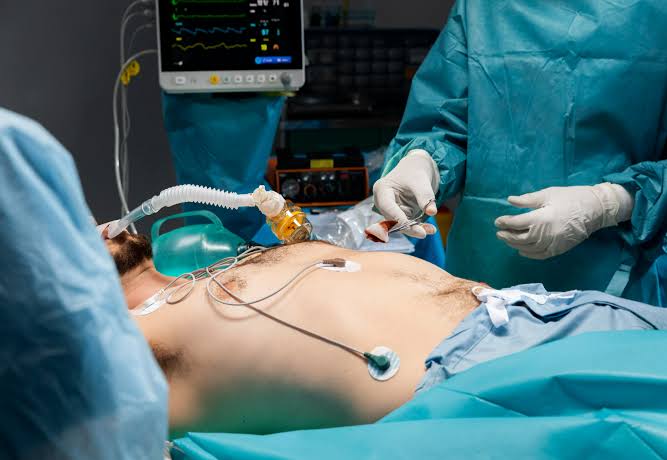
Heart Transplant
Transplant
Starting from
$65,000
Up to $180,000 depending on centre
Typical duration
30–75 days
Including pre-operative work-up
Content reviewed for medical accuracy by: Dr. Rodina Ainasoa · Medical Content Writer & Health Communications
Overview
Standalone orthotopic replacement of a failing heart with a healthy donor heart, indicated for end-stage heart failure, severe cardiomyopathy, or complex congenital heart disease no longer responsive to medical therapy, mechanical support, or other surgical options. This is a single-organ cardiac transplant — distinct from the combined heart-lung transplant covered under our Combined Organ Transplant program.
Your case is matched to a centre on the basis of clinical outcome data, not marketing. We coordinate every step — from pre-operative work-up to post-treatment follow-up — with a dedicated care coordinator.
What's included
Heart Transplant
Coordinated from
or message us on WhatsApp
No commitment required. Your data is never shared with third parties.
Bridge-to-Transplant (VAD) vs. Direct Listing for Heart Transplant
Heart transplants are almost always deceased-donor procedures, so the key clinical decision is not living vs. deceased donor but whether a patient is bridged to transplant with a mechanical Ventricular Assist Device (VAD) while waiting, or listed directly. This decision is made by a heart-failure and transplant cardiology team based on how urgently support is needed — never a self-assessment.
| Parameter | VAD Bridge-to-Transplant | Direct Listing (No VAD) |
|---|---|---|
| When it is used | Used when a patient's heart failure is severe enough that they are unlikely to survive the wait for a donor heart without mechanical circulatory support, per Cleveland Clinic. | Used when a patient is stable enough to wait for a matched donor heart on medical therapy alone, under close outpatient or inpatient monitoring. |
| Additional surgery required | Requires an additional major surgery to implant the VAD before the eventual transplant surgery, per Mayo Clinic. | No additional mechanical-support surgery is needed before the transplant itself. |
| Waiting-list time on support | Patients may live on VAD support for months to over a year while awaiting a matched donor heart, per UNOS/OPTN registry data. | Waiting time depends entirely on donor-organ availability and blood/tissue matching through the allocation system. |
| Additional risks | Carries device-specific risks such as infection at the driveline site, bleeding, and stroke, in addition to the risks of the later transplant surgery, per Cleveland Clinic. | Avoids device-specific risks, but carries the risk of clinical deterioration while waiting without mechanical support. |
| Decision-maker | Determined by the transplant cardiology and heart-failure team based on the severity and trajectory of heart failure, per Mayo Clinic. | Determined by the same multidisciplinary team when clinical stability allows safe waiting without mechanical support. |
The Procedure: Step by Step
The description below outlines the general orthotopic (standard) heart transplant process for the recipient. Your transplant cardiology and cardiac surgery team will confirm the specific steps and timeline for your case.
Pre-transplant evaluation and donor-heart matching
A transplant cardiology team confirms end-stage heart failure unresponsive to other therapies, completes blood/tissue typing, and lists the patient for a matched deceased-donor heart, per Cleveland Clinic and Mayo Clinic.
Median sternotomy and cardiopulmonary bypass
Under general anesthesia, the surgeon opens the chest via median sternotomy and places the patient on cardiopulmonary bypass, which takes over the function of the heart and lungs during the operation, per Mayo Clinic.
Removal of the diseased heart and implantation of the donor heart
The diseased heart is removed and the donor heart is implanted, most commonly using the bicaval technique, connecting the donor heart's chambers and major blood vessels to the recipient's own vessels, per Cleveland Clinic.
Weaning from bypass and closure
Once the new heart begins beating and blood flow is restored, the patient is weaned off cardiopulmonary bypass and the chest is closed; the surgery itself typically takes about four to six hours, per Cleveland Clinic.
Recovery Timeline
The transplant surgery itself typically takes about four to six hours, per Cleveland Clinic.
Most patients spend about a week in the cardiac intensive care unit immediately after surgery for close monitoring of the new heart's function, per Mayo Clinic.
The majority of acute cellular rejection episodes occur within the first three months after transplant, requiring frequent biopsy-based surveillance and closely managed immunosuppression, per peer-reviewed UNOS registry studies.
Most patients feel well enough to resume normal daily activities within about six months, though individual recovery pace varies, per Mayo Clinic.
Source: Mayo Clinic; Cleveland Clinic. Individual recovery and results vary and are guided by your transplant cardiology and surgical team.
Known Risks & Limitations
- Acute rejection is most common in the first several weeks to months after transplant, with the majority of acute cellular rejection episodes occurring within the first three months and a marked decline after six months, per peer-reviewed UNOS registry studies.
- Lifelong immunosuppressant medication increases the risk of infection, certain cancers, and other conditions, and most maintenance protocols use a three-drug regimen of a calcineurin inhibitor, an antimetabolite agent, and glucocorticoids, per Cedars-Sinai Medical Center research.
- As with any major open-heart surgery, risks include bleeding, infection, and blood clots, in addition to transplant-specific risks such as rejection and cardiac allograft vasculopathy over the longer term, per the NHS Blood and Transplant service.
- Factors that increase rejection risk include donor-recipient genetic mismatch, heart disease in the donor organ, and certain recipient conditions such as high cholesterol, insulin resistance, and pulmonary hypertension, per Cleveland Clinic.
- Median survival after adult heart transplant now exceeds 12 years according to registry data, though individual outcomes vary considerably by age, comorbidities, and adherence to the immunosuppression regimen, per Cleveland Clinic and Mayo Clinic.
Source: Mayo Clinic; Cleveland Clinic; NHS Blood and Transplant; Cedars-Sinai Medical Center; peer-reviewed UNOS/OPTN registry studies of heart transplant rejection. No procedure is without risk; your transplant team will review your individual case.
The CureSureMedico Care Pathway
Remote clinical review
Share your cardiology records, heart-failure history, current mechanical support status (if any), and recent test results. Our coordination team forwards your case to a transplant cardiology team for an initial candidacy assessment.
Eligibility and listing coordination
Because deceased-donor heart allocation and foreign-national listing policies vary significantly by country, our coordinators confirm realistic eligibility and waiting-time expectations with each partner transplant center before you commit to travel.
Clinic matching and estimate
A consolidated cost estimate covering pre-transplant work-up, listing and organ-coordination fees, surgery, and initial post-operative monitoring is issued before you travel.
Transplant surgery and early recovery
Travel, final pre-operative work-up, the transplant surgery itself, and the initial cardiac ICU stay and early recovery period are coordinated with your care team throughout.
Continuity of care post-return
A discharge summary, immunosuppression regimen, and biopsy/follow-up schedule are shared with your home cardiologist before you travel home, with remote coordination available for ongoing monitoring and any questions that arise.
Global cost comparison — Heart Transplant
Average coordinated costs across our partner centres. Final pricing depends on clinical complexity and chosen hospital.
| Country | Avg. cost | vs. cheapest |
|---|---|---|
🇮🇳 India New Delhi · Chennai · Bengaluru · Hyderabad · Mumbai · Kochi | $70,000 | —chevron_right |
🇹🇷 Turkey Istanbul | $140,000 | +100%chevron_right |
Costs are indicative estimates and vary by procedure specifics, hospital, and clinical complexity. Request a personalised estimate for your specific case.
Frequently asked questions
No — despite one first-in-human fully robotic heart transplant reported by a US center in early 2025, this remains an experimental, single-case technique and is not an established or widely offered alternative. Standard heart transplantation, whether at home or abroad, requires open median sternotomy to allow direct access for the vascular and cardiac anastomoses; there is currently no genuine minimally invasive or robotic option offered through our partner network.
No fees. No commitment.
Our guidance is completely free
We are compensated by our partner hospitals — never by patients. You get independent clinical matching, cost transparency, and end-to-end coordination at no cost to you.