
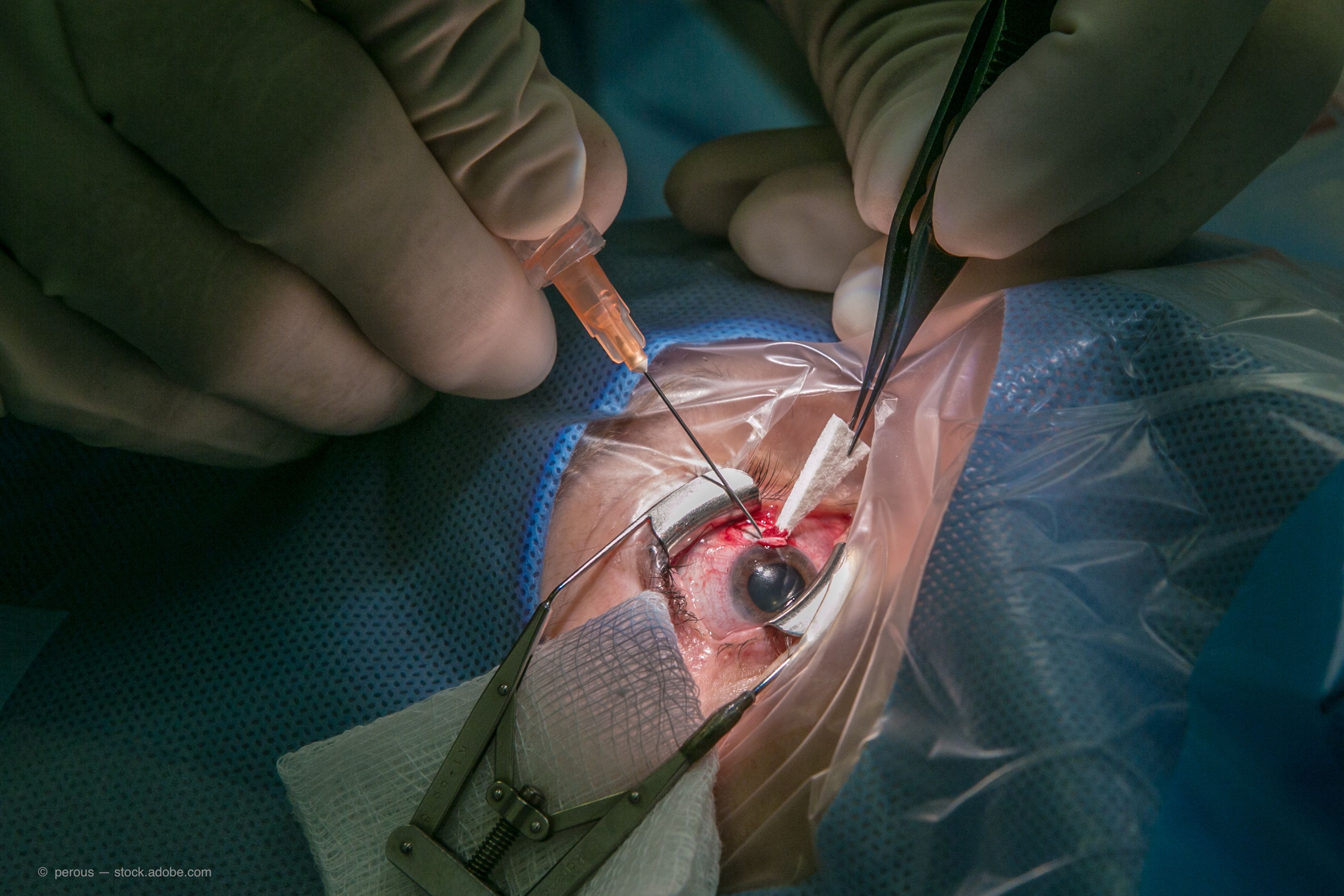
Glaucoma MIGS (Minimally Invasive Glaucoma Surgery)
Ophthalmology
Starting from
$1,800
Up to $5,500 depending on centre
Typical duration
3–7 days
Including pre-operative work-up

Content reviewed for medical accuracy by: Dr. Rodina Ainasoa · Medical Content Writer & Health Communications
Overview
Minimally invasive glaucoma surgery (MIGS) lowers intraocular pressure through tiny, ab-interno incisions that spare the conjunctiva, for patients with mild-to-moderate open-angle glaucoma. MIGS is frequently combined with cataract surgery in a single sitting and carries a substantially lower complication profile than traditional trabeculectomy, trading some of that older technique's pressure-lowering power for a much faster, gentler recovery.
Your case is matched to a centre on the basis of clinical outcome data, not marketing. We coordinate every step — from pre-operative work-up to post-treatment follow-up — with a dedicated care coordinator.
What's included
Glaucoma MIGS (Minimally Invasive Glaucoma Surgery)
Coordinated from
or message us on WhatsApp
No commitment required. Your data is never shared with third parties.
MIGS vs. Traditional Trabeculectomy
Minimally invasive glaucoma surgery (MIGS) and trabeculectomy both lower intraocular pressure, but they differ substantially in approach, safety profile, and how much pressure reduction they achieve.
| Parameter | MIGS (iStent / Hydrus / XEN / Goniotomy) | Traditional Trabeculectomy |
|---|---|---|
| Surgical approach | Ab-interno (through a tiny incision from inside the eye), conjunctiva-sparing, non-bleb-forming. | Creates a new drainage pathway under the conjunctiva, forming a filtering 'bleb'. |
| Complication risk | Shorter surgical time and a more favourable safety profile, with a lower risk of infection, scarring, and hypotony, per NCBI/PMC literature review. | Carries a risk of more serious complications, including bleb-related endophthalmitis and suprachoroidal haemorrhage, per American Academy of Ophthalmology and PMC sources. |
| Recovery | Rapid restoration of vision and return to normal activity, often within days. | Longer, more involved recovery with closer post-operative monitoring of the bleb. |
| Pressure-lowering power | Effective for mild-to-moderate disease, but some pressure-lowering effectiveness is traded for the improved safety profile. | Generally achieves a greater and more durable reduction in intraocular pressure, which is why it remains the gold standard for advanced or uncontrolled glaucoma. |
| Best suited for | Mild-to-moderate open-angle glaucoma or ocular hypertension, frequently combined with cataract surgery in the same sitting. | Advanced glaucoma, very low target pressures, or cases where MIGS or medication have not achieved adequate control. |
Source: American Academy of Ophthalmology; Glaucoma Research Foundation; NCBI/PMC ("Minimally invasive glaucoma surgery (MIGS) devices: risks, benefits and suitability"; "The Great Debate" — MIGS vs. trabeculectomy). Your surgeon selects the technique based on your disease severity, target pressure, and prior treatment history.
The Procedure: Step by Step
The exact MIGS device used — iStent, Hydrus, XEN gel stent, or a goniotomy-based technique — depends on your angle anatomy and surgeon assessment, but the general steps are similar.
Pre-operative assessment
Gonioscopy, visual field testing, and OCT optic nerve imaging confirm your glaucoma is mild-to-moderate and identify the drainage angle anatomy suited to a specific MIGS device.
Ab-interno access
The surgeon enters through the same tiny corneal incision used for cataract surgery, without disturbing the conjunctiva — this is what distinguishes MIGS from bleb-forming procedures.
Device placement or goniotomy
A microstent (iStent or Hydrus) is placed to bypass the trabecular meshwork, a gel stent (XEN) is positioned to create a controlled subconjunctival outflow, or a goniotomy blade opens the drainage angle directly, depending on the chosen technique.
Combined cataract surgery where indicated
When cataract is also present, phacoemulsification and lens implantation are commonly performed in the same operation immediately before or after the MIGS step.
Known Risks & Limitations
- MIGS generally provides less aggressive pressure lowering than trabeculectomy or tube shunt surgery, so it is not appropriate for advanced or rapidly progressing glaucoma.
- Temporary micro-hyphaema (small amount of blood in the front of the eye) and a transient rise in eye pressure can occur in the days after surgery, though these usually resolve without intervention.
- Device-specific complications such as stent obstruction or malposition are uncommon but can occasionally require a repeat procedure.
- There is no robotic-assisted version of MIGS — it is itself the minimally-invasive, ab-interno alternative to traditional open filtration surgery, so the relevant clinical choice is between MIGS devices/techniques and traditional trabeculectomy or tube shunt surgery, not open-versus-robotic technique.
Source: American Academy of Ophthalmology; Glaucoma Research Foundation; NCBI/PMC. No procedure is without risk; your surgical team will review your individual risk factors.
The CureSureMedico Care Pathway
Remote clinical review
Share your current IOP readings, visual field results, and drop regimen. Our coordination team forwards your case to a glaucoma specialist to confirm MIGS candidacy.
Device & clinic matching
Your partner centre confirms which MIGS device — iStent, Hydrus, XEN, or a goniotomy-based technique — and whether combined cataract surgery suits your angle anatomy and lens status.
Consolidated estimate
A cost estimate covering the surgeon fee, device cost, and any combined cataract surgery is issued before you travel.
Procedure & short-stay recovery
MIGS is typically a same-day or overnight procedure; your care team monitors early IOP response before you are cleared to travel home.
Global cost comparison — Glaucoma MIGS (Minimally Invasive Glaucoma Surgery)
Average coordinated costs across our partner centres. Final pricing depends on clinical complexity and chosen hospital.
| Country | Avg. cost | vs. cheapest |
|---|---|---|
🇮🇳 India New Delhi · Chennai · Bengaluru · Hyderabad · Mumbai · Kochi | $2,200 | —chevron_right |
🇹🇷 Turkey Istanbul | $3,200 | +45%chevron_right |
🇹🇭 Thailand Bangkok · Phuket · Chiang Mai | $4,200 | +91%chevron_right |
Costs are indicative estimates and vary by procedure specifics, hospital, and clinical complexity. Request a personalised estimate for your specific case.
Frequently asked questions
Traditional trabeculectomy creates a new drainage channel under the conjunctiva (a 'bleb') and can lower pressure more aggressively, but it carries a lengthier recovery and a real risk of serious complications such as bleb-related infection (endophthalmitis) and suprachoroidal haemorrhage. MIGS procedures are performed through tiny ab-interno incisions that leave the conjunctiva untouched, giving a shorter surgical time, fewer severe complications, and a much faster return to normal vision and activity — though this improved safety profile comes with somewhat less pressure-lowering power, which is why MIGS is generally reserved for mild-to-moderate disease rather than advanced glaucoma.
No fees. No commitment.
Our guidance is completely free
We are compensated by our partner hospitals — never by patients. You get independent clinical matching, cost transparency, and end-to-end coordination at no cost to you.