
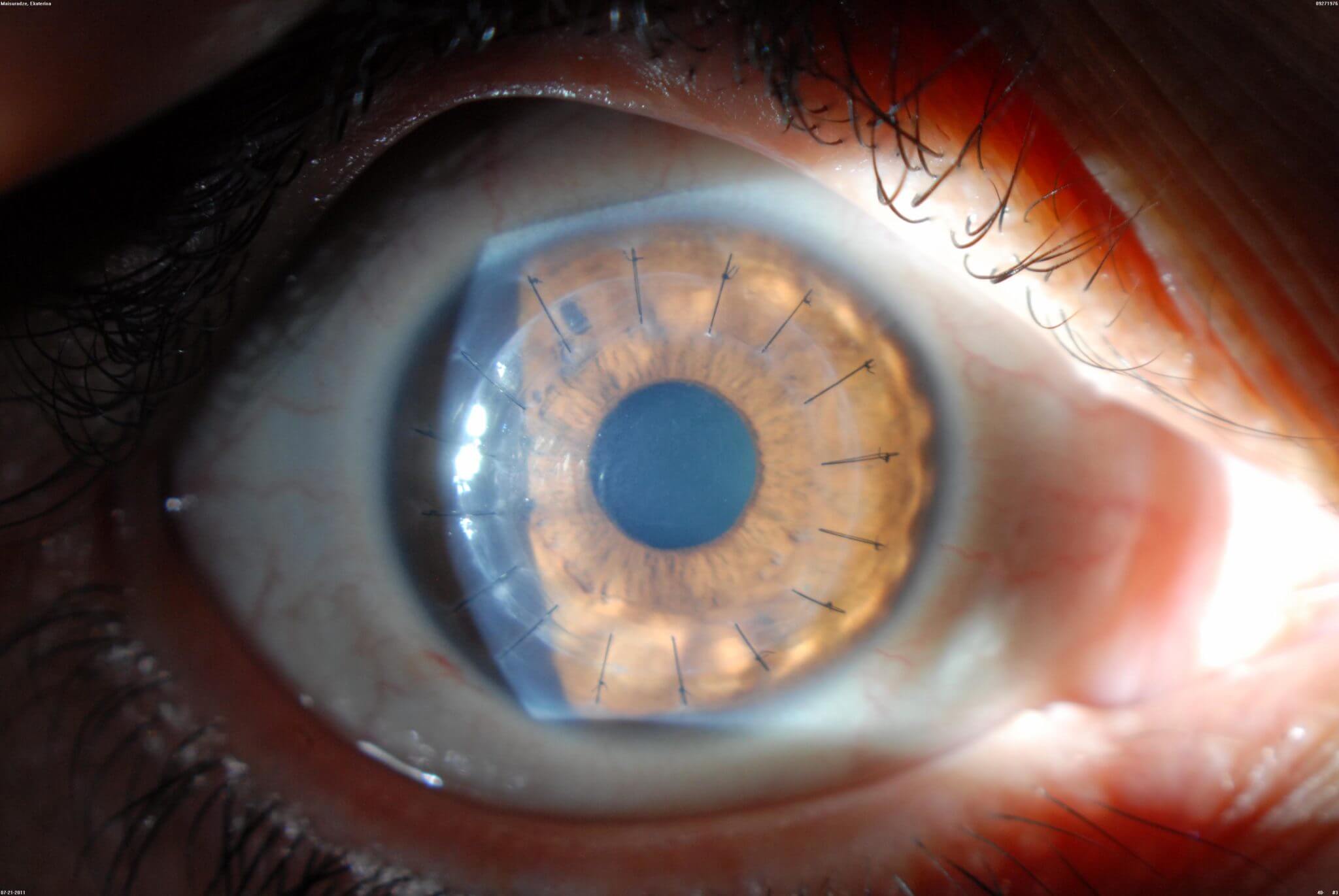
Corneal Cross-Linking (CXL)
Ophthalmology
Starting from
$700
Up to $2,500 depending on centre
Typical duration
3–7 days
Including pre-operative work-up

Content reviewed for medical accuracy by: Dr. Rodina Ainasoa · Medical Content Writer & Health Communications
Overview
Corneal cross-linking (CXL) is a treatment to halt the progression of keratoconus and other corneal ectasias by strengthening the corneal collagen fibres using riboflavin (vitamin B2) eye drops and UV-A light. Unlike corneal transplantation, CXL does not replace or reshape the cornea — it stabilises it, aiming to stop further weakening and preserve remaining vision.
Your case is matched to a centre on the basis of clinical outcome data, not marketing. We coordinate every step — from pre-operative work-up to post-treatment follow-up — with a dedicated care coordinator.
What's included
Corneal Cross-Linking (CXL)
Coordinated from
or message us on WhatsApp
No commitment required. Your data is never shared with third parties.
Epithelium-Off vs. Epithelium-On vs. Accelerated Cross-Linking
Corneal cross-linking (CXL) strengthens corneal collagen fibres with riboflavin (vitamin B2) drops and UV-A light to halt progressive keratoconus. Protocols differ in whether the corneal surface layer (epithelium) is removed and how quickly the UV light is delivered, which affects penetration, comfort, and recovery.
| Parameter | Epithelium-Off (Dresden Protocol) | Epithelium-On (Transepithelial) | Accelerated CXL |
|---|---|---|---|
| What it is | The corneal epithelium is removed before riboflavin is applied, allowing deeper drug penetration; this is the original, most-studied protocol, delivering UV-A at 3 mW/cm² for 30 minutes (5.4 J/cm² total dose). | The epithelium is left intact and riboflavin is formulated to cross it, avoiding epithelial removal but reducing how much riboflavin reaches the underlying stroma. | Delivers the same total UV-A energy dose as the standard protocol but at higher intensity over a shorter session, and can be combined with either an epithelium-off or epithelium-on approach. |
| Corneal penetration (demarcation line depth) | Produces a deeper corneal demarcation line (a marker of treatment depth) — one study measured a mean depth of around 220 micrometres at 3 months. | Produces a shallower demarcation line than epithelium-off — the same study measured a mean depth of around 127 micrometres — reflecting reduced riboflavin penetration. | Demarcation line depth with accelerated protocols is comparable within each epithelium-off or epithelium-on category, though generally shallower than the original slower Dresden protocol. |
| Comfort & visual recovery | Slower visual recovery and more post-treatment discomfort while the epithelium heals, typically over several days, per systematic review evidence. | Faster visual recovery, less postoperative pain, and a lower incidence of corneal haze than epithelium-off, per a systematic review and meta-analysis of the two approaches. | Recovery comfort follows the underlying epithelium-off or epithelium-on approach used, with the shorter UV session itself not materially changing comfort. |
| Effectiveness at halting progression | Despite deeper demarcation and slower recovery, epithelium-off CXL has the longest track record and demonstrated corneal thinning and flattening effect in halting keratoconus progression. | Both epithelium-off and epithelium-on approaches are effective at halting progressive keratoconus, though some reviews note epithelium-off shows a greater degree of corneal flattening and thinning. | Accelerated protocols aim to preserve the effectiveness of the slower protocol in a shorter session; your surgeon will weigh the evidence for your specific corneal thickness and progression pattern. |
| Best suited for | Patients with adequate corneal thickness who can tolerate a longer, more involved recovery in exchange for the most extensively studied protocol. | Patients prioritising comfort and faster return to normal activity, or those for whom epithelial removal carries added risk. | Patients and clinics seeking a shorter treatment session; suitability still depends on which underlying (epi-off or epi-on) approach is used. |
The Procedure: Step by Step
The steps below describe the general corneal cross-linking process. The specific protocol — epithelium-off, epithelium-on, or accelerated — is selected based on your corneal thickness, keratoconus severity, and surgeon assessment (see comparison above).
Pre-treatment evaluation
Corneal topography and pachymetry (thickness measurement) confirm progressive keratoconus and that your cornea is thick enough for safe treatment, per the American Academy of Ophthalmology (AAO).
Epithelium preparation
For epithelium-off protocols, the thin surface layer of the cornea is gently removed; epithelium-on protocols instead use a riboflavin formulation designed to cross the intact surface.
Riboflavin application
Riboflavin (vitamin B2) drops are applied to the cornea at set intervals to saturate the corneal stroma before UV exposure begins.
UV-A light exposure
The cornea is exposed to UV-A light — either at standard intensity for around 30 minutes or at higher intensity for a shorter accelerated session — which triggers new bonds (cross-links) between collagen fibres, strengthening the cornea, per Mayo Clinic.
Recovery Timeline
A bandage contact lens is often worn after epithelium-off treatment while the surface heals; discomfort, light sensitivity, and blurred vision are common in the first few days.
The corneal surface typically heals within about a week for epithelium-off protocols; epithelium-on patients generally experience a faster, more comfortable return to normal activity.
Vision can fluctuate as the cornea remodels; many patients notice gradual stabilisation of their prescription over the following months rather than an immediate change.
Follow-up corneal topography over 6–12 months confirms whether keratoconus progression has been halted, which is the primary treatment goal rather than immediate vision improvement.
Source: American Academy of Ophthalmology; Mayo Clinic; NCBI/PMC systematic review and meta-analysis of epithelium-on vs. epithelium-off corneal cross-linking. Individual recovery varies and is guided by your surgical team.
Known Risks & Limitations
- CXL is intended to stop keratoconus from worsening — it does not reliably reverse corneal steepening already present or guarantee improved unaided vision.
- Temporary corneal haze, light sensitivity, and discomfort are common in the days after epithelium-off treatment; infection risk, while uncommon, is higher when the epithelium is removed.
- Corneal thickness must be adequate for the chosen protocol; very thin corneas may not be candidates for standard treatment and may need an individualised, reduced-fluence approach.
- As with any procedure, individual healing and outcomes vary; a small proportion of patients may still show progression and require re-treatment or, ultimately, corneal transplantation.
- There is no robotic-assisted version of corneal cross-linking — it is a topical, light-based treatment rather than incisional surgery, so the relevant choice is between epithelium-off, epithelium-on, and accelerated UV protocols, not open-versus-robotic technique.
Source: American Academy of Ophthalmology; Mayo Clinic; NCBI/StatPearls. No procedure is without risk; your surgical team will review your individual risk factors.
The CureSureMedico Care Pathway
Remote clinical review
Share your corneal topography, pachymetry, and diagnosis history. Our coordination team forwards your case to a corneal specialist to confirm candidacy and recommend a protocol.
Protocol & clinic matching
Your partner centre confirms which protocol — epithelium-off, epithelium-on, or accelerated — suits your corneal thickness and progression pattern before your estimate is finalised.
Consolidated estimate
A cost estimate covering the treatment session, riboflavin, bandage contact lens where applicable, and initial follow-up is issued before you travel.
Treatment & short-stay recovery
CXL is typically a same-day outpatient treatment; your care team monitors initial healing and schedules a follow-up examination before you are cleared to travel home.
Continuity of care post-return
A treatment summary — including the protocol used and a topography follow-up schedule — is shared with your home ophthalmologist to confirm progression has been halted.
Global cost comparison — Corneal Cross-Linking (CXL)
Average coordinated costs across our partner centres. Final pricing depends on clinical complexity and chosen hospital.
| Country | Avg. cost | vs. cheapest |
|---|---|---|
🇮🇳 India New Delhi · Chennai · Bengaluru · Hyderabad · Mumbai · Kochi | $800 | —chevron_right |
🇹🇷 Turkey Istanbul | $1,400 | +75%chevron_right |
🇹🇭 Thailand Bangkok · Phuket · Chiang Mai | $2,000 | +150%chevron_right |
Costs are indicative estimates and vary by procedure specifics, hospital, and clinical complexity. Request a personalised estimate for your specific case.
Frequently asked questions
CXL is primarily intended to halt the progression of keratoconus, not to reverse existing corneal steepening or restore vision already lost. Some patients experience a modest improvement in corneal shape and vision over the following months, but the main goal is stabilisation — preventing the need for a future corneal transplant. Your surgeon will set expectations based on your topography and how advanced your keratoconus is at the time of treatment.
No fees. No commitment.
Our guidance is completely free
We are compensated by our partner hospitals — never by patients. You get independent clinical matching, cost transparency, and end-to-end coordination at no cost to you.